
Private Label vs White Label: Comparison Table and How to Choose
Quick answer: A white label product is a standard item the factory sells to many brands; you add your logo and packaging but can't change the product. A private label product is made to your specification, or changed for you, and is not sold to other brands in that form. White label is cheaper, faster and has lower minimums, but a competitor can sell the identical item. Private label costs more and takes longer, but is much harder to copy. Most dropshippers start with white label on a proven product and move to private label once it becomes a steady seller.
The two terms in plain English
Suppliers use these words loosely. Plenty of listings say "private label" when they mean "we'll print your logo on our standard product". Ignore the label and ask two questions instead:
- Can the product itself be changed, or only its logo and packaging?
- Is your version exclusive, or will the factory sell the same thing to the next brand that asks?
If the answers are "only the logo" and "not exclusive", it's white label, whatever the listing says. On Chinese supplier platforms you'll also meet two related terms: OEM, where the factory makes a product to the buyer's design, and ODM, where the factory sells its own design under the buyer's brand. A stock ODM product with your logo is effectively white label; an OEM product, or an ODM design modified for you under an exclusivity agreement, is private label.
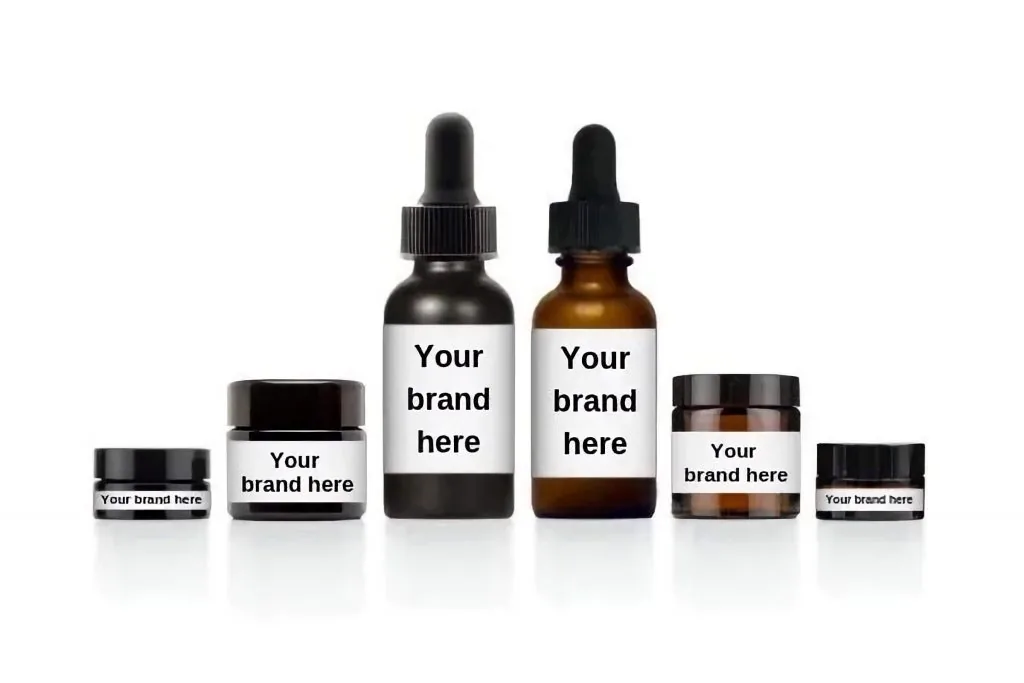
Side-by-side comparison
| White label | Private label | |
|---|---|---|
| Who designs the product | The factory | You, or the factory working to your spec |
| What you can change | Logo, label, packaging, inserts | Materials, size, color, features or formula, plus everything white label allows |
| Exclusivity | None: the same item goes to other brands | Your version only, if it is agreed in writing |
| Minimum order | Lower; often made from existing stock | Higher; needs its own production run |
| Time to launch | Fast: the product already exists | Slower: samples and a production run come first |
| Upfront cost | Lower | Higher: samples, a larger batch, sometimes new molds |
| Price pressure | High: shoppers can find the same item elsewhere | Lower: there is nothing identical to compare with |
| What you own | Your brand name and packaging design | Your brand plus your spec; check who owns any molds |
| Legal responsibility | Your brand, because it is on the label | Your brand, because it is on the label |
| Best for | Testing, quick launches, everyday items | Proven sellers, products with a clear flaw you can fix |
| PackQuay sourcing fee | Tier rate (10% down to 4%), plus 2.5% for branding | Tier rate plus 2.5%; new product development quoted separately |
What they share: your name means your responsibility
One row in that table is identical, and it surprises people. With either model, the brand on the label is the one regulators and customers hold accountable, not the factory. For US cosmetics, the business named on the label is the "responsible person" under FDA rules. In the EU, products must carry the manufacturer's details and an EU-based responsible person. Choosing white label does not hand those duties to the factory. Our private label dropshipping guide covers the label rules and costs in more detail.
How to choose: 5 questions
- Has the product already sold under a generic listing? If not, choose neither yet. Test it unbranded first; the four stages of branded dropshipping explains when to brand.
- Is there something customers would want changed? If reviews of the generic version keep mentioning the same flaw (a weak zip, a strap that's too short, a smell), private label lets you fix it. If customers are happy, white label is enough.
- Can you sell the factory's minimum run in reasonable time? If a custom run equals a year of sales, stay with white label for now.
- How easy is it for a rival to find the identical item? If competitors are already running ads for the same product at a lower price, a white label version will keep getting dragged into price wars.
- Can you fund samples and a longer wait? Private label means paying for samples and a bigger batch, then waiting for production before you sell a unit.
| Choose white label if… | Choose private label if… |
|---|---|
| You want to launch within weeks | The product is already a steady seller |
| Cash is tight or the product is unproven | You can fix a real complaint about the generic version |
| The product is an everyday item where design matters little | Copycats are undercutting you on the same item |
| You want to try several products at once | You plan to build a product line around it |
The middle path most stores take
You don't have to choose once and forever. A common route is: white label product, then custom packaging and an insert card, then a bundle that combines it with other items you sell, and finally a private label version of the bestseller. A bundle in your own box is already hard to compare on price, even when every item in it is white label. Our custom packaging guide covers that step.
Questions to ask the factory before you commit
- Is this design sold to other brands, and will my modified version be sold to anyone else?
- If a new mold is made, who owns it, and can it be moved to another factory?
- What is the minimum for logo work, and what is the minimum for a modified product?
- Can I approve a pre-production sample with my branding?
- Which test reports or certificates do you have for my markets?
Get the exclusivity and mold answers in writing. A verbal "only for you" is worth nothing when the same product appears in another store's ad.
How PackQuay helps with either route
We source both white label and private label products from factories in China, ask the questions above on your behalf, inspect each batch (20% free), and store and ship from our own warehouse in Xinxiang. If you are still looking for a product to brand, see how to find white label products or our product sourcing service. Send a product link to your account manager on WhatsApp and we'll quote both the white label and private label versions so you can compare.
FAQ
What is the main difference between private label and white label?
A white label product is a standard item sold to many brands, with only the logo and packaging changed. A private label product is made or modified to your specification and is not sold to other brands in that form.
Is white label or private label better for dropshipping?
White label is usually better for testing and fast launches because minimums are lower and the product already exists. Private label suits a proven seller you want to protect from copycats.
Can a white label product be exclusive to my store?
Only if the factory agrees in writing not to sell it to other brands, and then it is effectively private label. By default, white label products are sold to anyone.
Are white label products lower quality than private label?
Not necessarily. Both often come from the same factories. Quality depends on the factory and on inspection before shipping, not on the label model.
Does private label cost more than white label?
Upfront, yes: samples, a larger production run and sometimes new molds. In return you face less direct price competition. At PackQuay both carry the same 2.5% branding add-on to the sourcing fee.