
What Is the Best Dropshipping Product? 6 Traits, With Examples
Quick answer: There is no single best dropshipping product, and any list that names one is out of date by the time you read it. The best products share a profile instead: their value is obvious in a few seconds of video, they're light and compact, they survive a long trip, they leave room for ad spend after landed cost, they carry little legal risk, and they give buyers a reason to come back. A pet-hair remover or a set of cable organizers fits that profile; a glass lamp or a kids' toy with a button battery doesn't. The best product for you is one that fits the profile and also fits your budget and sales channel.
Why "best product" lists don't help
Three problems. Everyone reads the same lists, so the products on them are the most crowded in every ad auction. The sales figures in them usually can't be checked. And a product that works for a store with a large ad budget can sink a store that's testing on a small one. A better question than "what's the best product?" is "what does a good product look like for a store like mine?" The six traits below answer the first half; the table further down answers the second.
The 6 traits, with examples
The examples are product types, not specific listings or sales claims. Use them to train your eye.
1. Its value is obvious in seconds
Most dropshipping sales start with a short video or an image ad shown to people who've never heard of you. A product whose result you can see (a mess cleared, a tangle gone, a before and after) does the selling on screen. A product whose benefit is invisible, slow or needs explaining asks a stranger to trust you, and strangers rarely do.
- Fits: pet-hair and lint removers, grout and gap brushes, cable organizers, collapsible storage.
- Doesn't fit: wellness products whose results can't be shown (and whose claims attract regulators), plain basics like generic t-shirts.
2. Light and compact
Shipping from China is priced by weight, or by box size when the box is large for what it weighs. A product that fits in a padded mailer keeps that cost small and gives you more shipping lines to choose from.
- Fits: phone stands, hair clips, resistance bands, travel organizers.
- Doesn't fit: furniture, large planters, rigid storage boxes that ship mostly air.
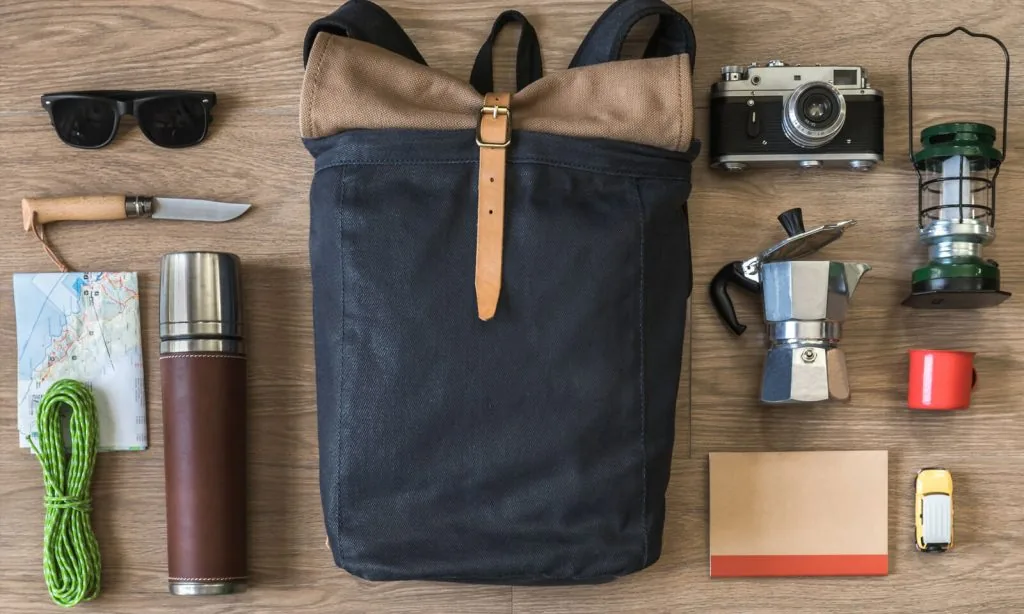
Lay a few products side by side and the shipping math shows itself: the rope, sunglasses and notebook travel easily in a mailer, while the camera, lantern and moka pot need padding and a bigger box.
3. It survives the trip
A parcel from China is sorted, loaded and handled many times before it reaches your customer. A breakage costs you a refund, a reship and often a bad review.
- Fits: silicone, fabric, ABS plastic, stainless steel.
- Doesn't fit: glass, ceramics, thin acrylic, anything with a large screen.
4. Room for ad spend after landed cost
Per-order costs don't shrink with the price. On PackQuay's rates, picking and packing a single-item order costs $2.00 on a day with fewer than 20 orders. That's 20% of a $9.99 sale but under 7% of a $29.99 one. Add shipping and the US duty every parcel from China now pays, and a cheap product often has nothing left for advertising. Look for products whose price, after landed cost, leaves room for what an ad costs to win one sale.
- Fits: products that look worth more than they cost, such as a well-packed grooming kit or a multi-piece organizer set.
- Doesn't fit: items buyers know cost a few dollars everywhere.
5. Little legal or IP risk
Some product types need test reports, certificates or registrations before they can be sold in the US, and the cost lands on you before the first order. Others can't be sold at all because they copy someone's brand or design.
- Fits: non-electric home, pet and fitness accessories.
- Doesn't fit (without paperwork): kids' toys, cosmetics, gadgets with button batteries or radios. Never: anything resembling a brand. Our niche guide lists the main US rules.
6. A reason to come back
The first sale usually pays for the ad that won it. Repeat sales cost far less to win, and that's where a store's profit builds up. Products with refills, replacement parts or natural add-ons give customers a reason to return to you instead of searching again.
- Fits: replacement brush heads, lint-roller refills, filters, a second size or color.
- Doesn't fit: one-time durable gadgets with nothing to add.
Best for whom? Match the profile to your store
| Your situation | Look for | Avoid |
|---|---|---|
| First store, small test budget | Light, sturdy, one size, few variants, value obvious on camera | Kids' products, electronics, anything fragile |
| Building a brand | Products you can improve and package as your own, with a custom box or insert card | Commodities with nothing to add |
| Selling mainly through TikTok content | A strong visual result you can film yourself | Cheaper versions that don't perform like the viral video |
| Bigger budget, higher prices | Durable, repairable products with real value; see our high-ticket guide | Products with no spare parts or after-sales plan |
| Steady sellers you'll keep in stock | Consumables and add-ons with year-round demand | Fads with a single spike in search interest |
A 60-second check for any product idea
- Could a stranger understand what it does from a 5-second clip?
- Does it fit in a mailer or a small box?
- Would it survive being dropped in that packaging?
- After landed cost, is there room to pay for an ad and still profit?
- Is it free of test, certificate and brand problems?
- Is there something to sell the same customer next?
Five or six yes answers? Put it through our full 10-point product scorecard, then compare it with the product types that suit shipping from China. Three or fewer, move on. There will be another idea tomorrow.
How PackQuay helps
We don't sell a catalog or push products. You send the item you're considering, by link, photo or spec, on WhatsApp, and we find the factory, quote landed cost to your market and flag anything that's hard to ship. If you go ahead, we can add your branding with custom boxes and insert cards (see packaging and branding), combine multi-item orders into one parcel, and dispatch stocked orders within 24 hours (48 at peak).
FAQ
What is the best product to dropship?
There isn't one product that's best for every store. The best ones share a profile: obvious value on video, light, sturdy, room for ad spend after landed cost, low legal risk and a reason to buy again. Pick the one that fits that profile and your budget.
Which dropshipping products have the highest profit margins?
Margin depends on landed cost and what buyers will pay, not on the category. Products that look worth far more than they cost to make and ship leave the most room. Work it out per product: product, packing, shipping and US duty against your selling price.
Are cheap products good for dropshipping in 2026?
Often not on their own. Packing, shipping and the US duty every parcel from China now pays take a big share of a low price, leaving little for ads. Bundling cheap items into sets is a common fix.
Are trending products the best products to sell?
Trending products sell fast but attract competitors fast, so ad costs rise and demand fades. Mix them with steady sellers, and reorder trending ones in small batches.
Can PackQuay tell me which products sell best?
No. We never share client data or sales information. We source and quote the products you choose and tell you about anything that's hard to ship.