How to Choose a Dropshipping Niche: 7-Point Scorecard (2026)
Quick answer: A dropshipping niche is one kind of buyer with one kind of problem, such as "owners of long-haired dogs fighting shedding," not "pet supplies." Choose the niche before you choose products, and choose it with a scorecard: lasting demand, a buyer you can reach, room for margin after landed cost, products that ship well from China, a light compliance load, reasons to buy again, and competition you can beat. Score each candidate from 1 to 5 on all seven and shortlist only the high scorers. Treat niches built on children's products, cosmetics, supplements, button-battery gadgets or food as advanced: US rules apply before your first sale, and someone has to pay for the testing and paperwork.
Category, niche, product: get the level right
Most niche mistakes are really level mistakes. Sellers either pick something so broad they can't target it, or something so narrow it's a single product.
- Category: pet supplies. Too broad to advertise and too broad to stand out. You compete with every pet store online.
- Niche: grooming for long-haired dogs. One buyer, one problem, one message for your ads and videos.
- Product: a deshedding brush. One item inside the niche. Products come and go; the niche stays.
A workable niche holds enough related products to fill a store and build bundles: a brush, a wide-tooth comb, nail clippers, a grooming glove, a lint roller for the sofa. If you can only name two products, you've found a product, not a niche.
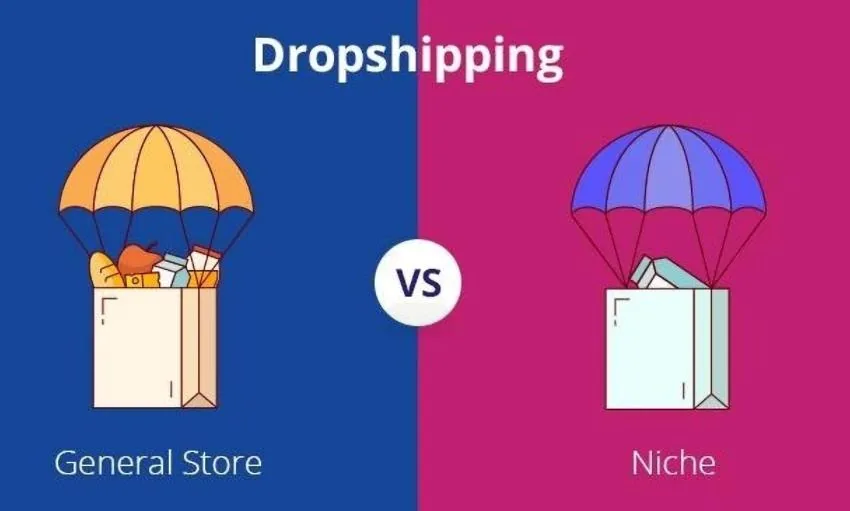
General stores still have a use: testing many unrelated products quickly. But a niche store is easier to advertise, easier to brand and far more likely to sell to the same customer twice.
The 7-point niche scorecard
Score each candidate niche from 1 (weak) to 5 (strong). Be strict: a 3 means average, not "probably fine."
| Criterion | What you're checking | Scores 1 | Scores 5 |
|---|---|---|---|
| 1. Lasting demand | Search interest over several years | One sharp spike, then a slide | Flat or rising, with predictable seasonal peaks |
| 2. Reachable buyer | Can you name where these people gather? | "Everyone" is the audience | Clear communities, creators, search terms and interests |
| 3. Margin room | Typical shelf price vs. your landed cost | Buyers expect prices close to your cost | Buyers pay several times the landed cost |
| 4. Shipping fit | Weight, size, fragility, restricted contents | Bulky, fragile, liquid or battery-heavy | Light, compact, sturdy, nothing restricted |
| 5. Compliance load | US product rules that apply | Lab tests, certificates or FDA registration for most products | No product-specific rules beyond general safety and honest labels |
| 6. Repeat potential | Reasons to come back | One-time purchase, nothing to add | Consumables, replacement parts, add-ons |
| 7. Beatable competition | What you'd be up against | Identical listings everywhere, big brands on top | Gaps you can fill: a better version, a bundle, a voice |
Add up the scores out of 35. As a rough guide: under 20, drop it; 20 to 26, keep it as a backup; 27 or more, shortlist it. A score of 1 on margin, shipping fit or compliance is a warning on its own, whatever the total says.
How to fill in the scorecard with free sources
- Demand: Google Trends. Set the range to five years and the country to your main market. The numbers are relative: 100 is the peak for that term, region and period, not a count of searches. Add a steady reference term to see whether your niche is growing or just noisy.
- Buyer: TikTok, Reddit and Facebook groups. Search the problem, not the product ("dog hair everywhere" rather than "deshedding brush"). Active communities and creators who post about it every week mean you can reach these people with content and targeting.
- Margin: shelf prices vs. factory prices. Note what three or four similar products sell for on Amazon and in independent stores. Then check rough factory prices on 1688 or AliExpress and add shipping, US duty and packing. Our profit margin guide walks through the landed-cost math.
- Shipping fit: list the core products. Write down weight, size and materials for five of them. Glass, ceramics, liquids, powders and big rigid items all score low. Our warehouse can't ship powders, liquids over 100 ml, food, flammable or corrosive goods, weapons or counterfeits.
- Compliance: run the table below.
- Repeat potential: ask what the customer needs next month. A refill, a replacement head, a second size?
- Competition: search the niche's main product on Amazon and TikTok. If page one is big brands and identical generic listings, ask what you'd do differently. If you can't answer, score it low.
Niches with US rules to check before you commit
These niches aren't banned, and some are very profitable. They're just not beginner niches: the rules cost money before you sell anything, and the responsibility usually lands on the brand or importer, not on the factory.
| Niche | Rule to know | What it means for you |
|---|---|---|
| Children's products (toys, kids' clothing, school items) | Products designed mainly for children 12 and under need third-party testing at a CPSC-accepted lab and a Children's Product Certificate. Since July 8, 2026, certificate data must also be filed electronically with US Customs at import. | Testing costs for every product before launch. Our school supplies guide shows how this works in practice. |
| Gadgets with button or coin batteries (remotes, LED items, small trackers) | Reese's Law (16 CFR 1263): secured battery compartments, warnings on the product and packaging, and a certificate of compliance. | Ask the factory for test reports before you order. Many cheap gadgets don't have them. |
| Cosmetics and skincare | FDA rules under MoCRA, including facility registration and product listing, with exemptions for some small businesses. A claim to treat or prevent a disease makes the product a drug. | Your ad copy matters as much as the formula. See our makeup sourcing guide. |
| Supplements, food and pet food | FDA food rules, and health claims draw extra scrutiny. | Not something we can ship from our warehouse: food is on our restricted list. |
| Wireless electronics (Bluetooth, Wi-Fi) | FCC equipment authorization. | Check the FCC ID before you buy. Our high-ticket sourcing guide covers the checks. |
| Brand look-alikes and licensed characters | Trademark and copyright law. | Not a niche at all. We don't source or ship counterfeits, and ad platforms prohibit them. |
Worked example: two niches, scored
Here's the scorecard on two made-up candidates. Your research will give different numbers; what matters is the reasoning behind each score.
| Criterion | Kids' craft kits | Grooming for long-haired dogs |
|---|---|---|
| Lasting demand | 4: steady, with gift-season peaks | 4: steady all year |
| Reachable buyer | 4: parent groups, craft creators | 4: breed groups, grooming creators |
| Margin room | 3: many cheap kits on the market | 4: tools sell well above factory price |
| Shipping fit | 3: many small parts; glue and paint complicate shipping | 5: plastic and steel tools, light |
| Compliance load | 1: children's product testing, certificate and eFiling for every kit | 5: non-electric tools, few product-specific rules |
| Repeat potential | 3: new kits, but each one needs new testing | 3: replacement blades, second dog, gifts |
| Beatable competition | 2: big toy brands, crowded marketplaces | 3: crowded generics, room for a breed-specific bundle |
| Total | 20 | 28 |
The craft kits aren't a bad business. They're a bad first niche, because every new kit means new testing before it can sell. The grooming niche is less exciting and stronger on everything that keeps a small store alive.
After the niche: shortlist products
Once a niche scores 27 or more, list 10 to 20 products inside it and score each one with our product scorecard. For where to find those candidates, see how to find winning products. Then keep the niche fixed for several product tests. Switching niches every week throws away what you've learned about the buyer.
How PackQuay helps
When you have a shortlist, send us 3 to 5 product links from the niche on WhatsApp. Your account manager comes back with factory options and a landed-cost quote for your main market, so the margin and shipping rows of your scorecard use real numbers. We'll also tell you straight away if anything in the niche can't ship from our warehouse in Xinxiang. Sourcing costs 10% of the goods on orders up to $5,000 and less on bigger ones, 20% of each batch is inspected free, and storage is free for your first 2 months. More on our product sourcing page.
FAQ
What is a dropshipping niche?
A niche is a specific buyer with a specific problem, such as owners of long-haired dogs dealing with shedding. It's narrower than a category like pet supplies and broader than one product, so it can fill a store and gives you one clear audience to market to.
How do I know if a dropshipping niche is profitable?
Compare what similar products sell for with their landed cost: factory price plus shipping, US duty and packing. If buyers pay several times the landed cost and you can reach them with content or ads, the niche has room for profit. A product test confirms it.
Which dropshipping niches should beginners avoid?
Niches where most products need lab testing, certificates or FDA registration before sale: children's products, cosmetics, supplements, food, gadgets with button batteries and wireless electronics. Brand look-alikes are off-limits for everyone.
Should I choose a niche I'm passionate about?
Interest helps, because you'll make content and talk to these customers for months. But score the niche like any other. Passion doesn't fix a niche with no margin or heavy compliance costs.
Is a general store or a niche store better?
A general store suits fast testing of unrelated products. A niche store is easier to advertise and brand and more likely to earn repeat orders, so most sellers move to a niche once they find products that sell.
Can PackQuay tell me which niche to pick?
No. We never share client data or sales information, so we won't tell you what other stores sell. We quote the products you're considering and flag anything that's hard or impossible to ship.