Sourcing Makeup From China in 2026: MoCRA, Colors, QC, Packaging
Quick answer: You can source good makeup in China, but in the US the brand on the label carries the legal weight. Under MoCRA, the 2022 cosmetics law, that brand is the "responsible person". It must put a US contact on the label for adverse event reports, report serious adverse events to the FDA within 15 business days, keep safety records and list each product with the FDA unless it qualifies as a small business. The most common reason makeup from China gets stopped at the US border is color additives: pigments that are legal elsewhere but not approved in the US, or not approved for the eye area. Start with tools and lashes, check every colorant before you order, and inspect each batch for shade, fill and leaks.
Start with the products that carry the least risk
Makeup isn't one category. The rules get stricter the closer a product gets to the eye and the longer it stays on.
| Product group | How the FDA sees it | Main risk when sourcing |
|---|---|---|
| Brushes, sponges, lash curlers, cases | Generally treated as tools, not cosmetics | Mostly quality: shedding, glue, smell, finish (animal-hair bristles can bring wildlife import rules) |
| False eyelashes and lash adhesive | Cosmetics (the FDA says so explicitly) | Adhesive ingredients and labeling; band quality |
| Face and lip products (foundation, blush, lip gloss) | Cosmetics | Color additives, shade consistency, leaks |
| Eye products (eyeliner, mascara, eyeshadow, magnetic liner) | Cosmetics, with stricter color rules | Colors not approved for the eye area; no small-business exemption from listing for products that touch the eye's mucous membrane |
| Lash and brow tints, kohl | Restricted: permanent tints are professional-only, kohl is not approved | Not suitable for an online store |
A store selling brushes, sponges and lashes can learn sourcing, QC and packaging with very little regulatory exposure, then add face and lip products once its labeling and records are in place.
MoCRA in plain English
The Modernization of Cosmetics Regulation Act (MoCRA) gave the FDA its first big set of new cosmetics powers in decades. The key term is responsible person: the manufacturer, packer or distributor whose name appears on the label. If your brand is on the box, that's you, even if a factory in China made every unit. Here is what applies today:
- Label contact. Since December 29, 2024, every label needs a domestic US address, a domestic phone number or electronic contact details (a website works) where customers can report adverse events.
- Adverse events. Serious adverse events must be reported to the FDA within 15 business days, with a copy of the label. Keep records of all adverse event reports for six years, or three for small businesses.
- Safety substantiation. Keep records showing the product is safe for its intended use. No specific test is mandated, but the evidence must be scientifically sound.
- Product listing. The responsible person lists each product, with its ingredients, with the FDA and updates the listing every year.
- Facility registration. The factory registers with the FDA, names a US agent if it's abroad, and renews every two years.
- Small-business exemption. Businesses whose average US cosmetics sales over the past three years are under $1 million (adjusted for inflation) don't have to register or list. The exemption doesn't apply to products that regularly touch the eye's mucous membrane, are injected, are for internal use, or change appearance for more than 24 hours. It never covers labeling, adverse event reporting or safety records.
Still pending as of October 2026: the FDA's manufacturing practice (GMP) rule is listed as a long-term action, a fragrance allergen labeling proposal is targeted for November 2026, and the talc asbestos-testing proposal was withdrawn in November 2025. Separately, a growing number of states, including California, Colorado, Minnesota and Washington, ban intentionally added PFAS in cosmetics. That matters for long-wear and waterproof formulas, so ask the factory in writing.
Two practical warnings. The FDA doesn't issue registration certificates, so a supplier's "FDA certificate" means nothing. And platforms check: TikTok Shop US, for example, requires category approval for beauty, with proof of FDA registration or a self-attested MoCRA exemption.
The color additive trap
Most cosmetic ingredients need no FDA approval. Color additives are the exception. Each one must be approved for its intended use, and some must come from batches the FDA has certified. Several colors approved for cosmetics in general are not approved for use around the eye. The FDA keeps an import alert (53-06) that lets it detain cosmetics with color additive violations without examining them, and it lists several eye products.
How to stay out of it:
- Get the full ingredient list (INCI names) with the Color Index (CI) number for every pigment, for every shade you plan to sell.
- Check each colorant against the FDA's color additive listings for the exact use: lips, face or eye area.
- For eye products, assume the factory's standard formula was made for another market and needs checking shade by shade.
- Get the confirmed formula in writing and tie it to your approved sample. A silent pigment swap in a later batch is a new problem.
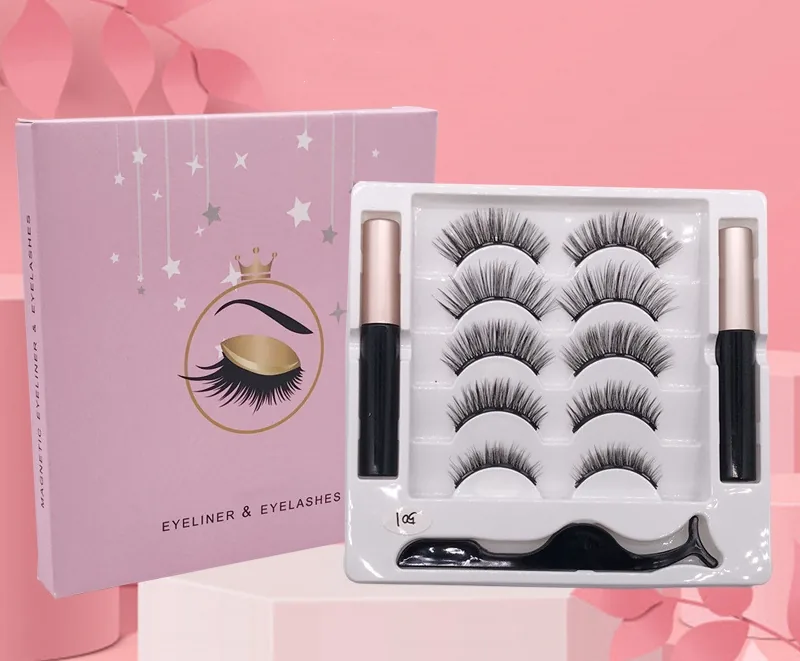
Kits like this one combine two product types: the lashes are a cosmetic, and the magnetic liner is an eye product whose pigments must be approved for the eye area.
QC checklist for every makeup batch
- Shade: swatch against the approved sample under the same light. Customers notice small shifts between batches.
- Batch code: on every unit, so a complaint can be traced to a production run.
- Fill: weigh a sample of units against the net quantity on the label.
- Leaks and breakage: turn liquids upside down, press pumps and caps, and check pressed powders and compact mirrors for cracks.
- Lashes: even bands, no glue residue, pairs that match, trays that hold them in shape. For magnetic lashes, check they grip the liner.
- Brushes and sponges: do a gentle pull test for shedding, check ferrules are glued, and reject any with a strong smell.
- Labels: English product name, net quantity, ingredient list, the responsible person's name and place of business, the adverse-event contact and any warnings. A box printed for the Chinese market fails here.
- Seals: shrink wrap or tamper seals intact.
Storage matters too. The FDA advises against storing eye cosmetics above 85°F, because heat breaks down preservatives. Plan summer shipments and warehouse space with that in mind. See our inspection page for how batch checks and photos work.
Packaging and shipping
- Retail box first. The outer box carries the legally required label, so print it in English to US rules before you order.
- Protect glass and compacts. Foundations in glass bottles and pressed powders go in a box or padded mailer with an insert, not a loose poly bag.
- Watch for dangerous goods. Nail polish, perfume and aerosol setting sprays are flammable and count as dangerous goods for air transport, and international post doesn't accept them. Ask which shipping lines can take them before you list them.
- Bundle what sells together. Lashes with liner, or a brush set with a sponge, can be kitted into one ready-to-ship unit.
Branded boxes and inserts are covered on our packaging and branding page. For the steps of putting your own label on a factory product, see our private label dropshipping guide.
What private-label sourcing costs with us
Our sourcing fee is a percentage of the product cost per transaction, plus 2.5% for private label. Say you order $8,000 of private-label lash and liner kits. That falls in tier 2 at 9%, plus 2.5% for private label, so the sourcing fee is 11.5% of $8,000: $920. 20% of the batch is inspected free on arrival, and extra inspection or kitting is $7 per person per hour. Shipping is charged at cost. The full tables are on our pricing page.
How PackQuay helps
We find makeup factories in China, collect ingredient and color lists for you to check, compare samples against your approved shade, and inspect and pack each batch in our Xinxiang warehouse under your brand. The responsible-person duties stay with your brand: the label contact, adverse event reports, safety records and FDA listing. We'll make sure the paperwork you need from the factory comes with the goods. Send us your product links on WhatsApp to get started.
FAQ
Can I sell makeup made in China in the US?
Yes. Most makeup sold in the US is legal to import from China, but the brand on the label is the responsible person under MoCRA. It must provide a US contact for adverse event reports, keep safety records, report serious adverse events and list products with the FDA unless exempt.
Who is the responsible person under MoCRA?
The manufacturer, packer or distributor whose name appears on the cosmetic label. If you sell private-label makeup under your own brand, that's your business, not the factory.
Does the small-business exemption mean I can ignore MoCRA?
No. Businesses with under $1 million in average annual US cosmetics sales can skip FDA facility registration and product listing, but they must still meet labeling, adverse event reporting and safety substantiation rules. The listing exemption doesn't cover products that touch the eye's mucous membrane.
Why does makeup from China get detained at US customs?
The most common reason is color additives: pigments that aren't approved in the US, or aren't approved for the eye area. Missing English ingredient lists and false "FDA approved" claims are other causes.
Do I need an FDA certificate to sell cosmetics?
No such certificate exists. The FDA does not issue certificates for cosmetic facility registration or product listing, so treat any supplier's "FDA certificate" with suspicion and ask for the facility's registration details instead.
Can PackQuay register my cosmetics with the FDA?
Responsible-person duties such as product listing and adverse event reporting stay with your brand. We source, inspect, pack and ship, and we collect the ingredient lists and factory details you need for your own filings.