
Ecommerce Fulfillment System: Definition, Parts and 4 Models
Quick answer: An ecommerce fulfillment system is everything that turns an online order into a delivered parcel: the sales channels where orders arrive, the order and inventory records, the warehouse where items are picked and packed, the carriers that deliver them, and the path for returns. "System" means the software and the physical operation together. Stores run it in one of four models: in-house, dropshipping, outsourced to a 3PL or fulfillment company, or a hybrid. Whichever model you choose, the parts must share three data flows: orders going to the warehouse, tracking coming back, and stock levels kept in step.
The six parts of a fulfillment system
Every store has all six parts, even a one-person shop where the "warehouse" is a spare room. What changes as you grow is who runs each part and how well they talk to each other.
| Part | Its job | Usually run by | Sign it's broken |
|---|---|---|---|
| 1. Sales channels | Take payment and create the order (Shopify, WooCommerce, marketplaces, social shops) | You | Orders accepted for stock you don't have |
| 2. Order management | Check, hold, split or route each order to the right stock | Your store admin, or a separate OMS | Paid orders that sit untouched for days |
| 3. Inventory records | Know how many of each SKU are where | The warehouse, with counts reflected in your store | Overselling, or "in stock" items nobody can find |
| 4. Warehouse operations | Receive, store, pick and pack | You, a supplier or a fulfillment partner | Wrong items, slow dispatch |
| 5. Shipping | Choose the line, print labels, add customs data, hand over, track | The warehouse plus carriers | Tracking that never updates |
| 6. Returns | Receive, check, refund or replace, restock | You or the warehouse | Refunds paid with no item coming back |
If you only remember one thing: parts 2 and 3 are records, parts 4 and 5 are physical work. Most fulfillment failures happen where a record and the physical world disagree.
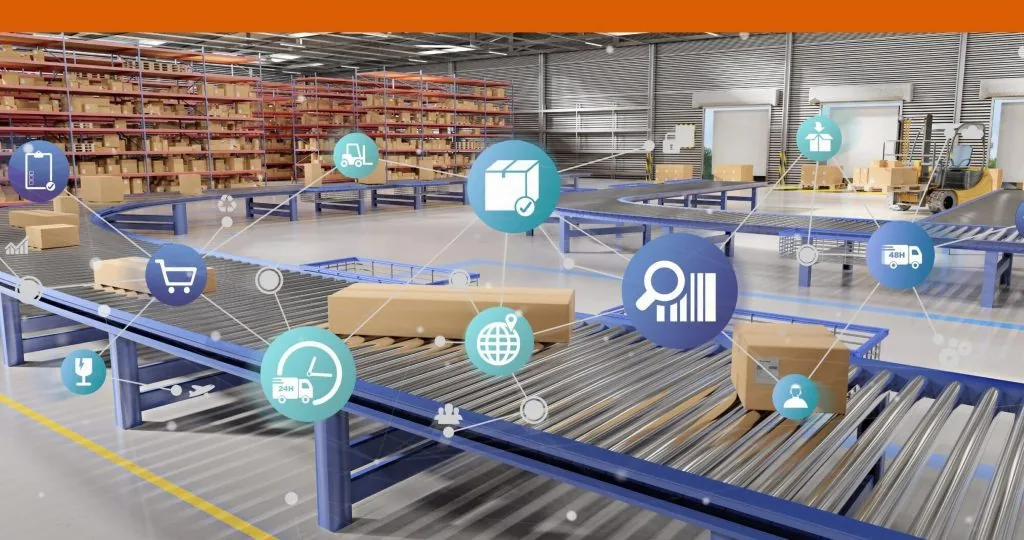
The three data flows that hold it together
- Orders flow out. Every paid order travels from your store to whoever packs it, with the exact variant, quantity, address and shipping method. A missing variant link or a half-typed address stops the order here.
- Tracking flows back. Once the parcel is handed to the carrier, its tracking number goes back to your store, which marks the order fulfilled and lets the customer follow it. Whether that happens through software or a daily file, it should happen every day and only for parcels that have really moved.
- Stock flows across. What is on the shelf has to match what the store says is available. Without this, you sell items that don't exist or hide items that do.
Whether these flows run through a store connection or a daily order file, what keeps them healthy is a fixed routine: orders reaching the warehouse every day in a format it can't misread, tracking numbers getting back to customers the same day the parcel ships, and a stock count checked at least weekly. With PackQuay, message us on WhatsApp and we connect your Shopify or WooCommerce store for you. Orders come in automatically, and tracking numbers go back to your store once parcels ship. You can also send orders as a CSV or Excel file. For the records side of the system, see what order management covers.
Four ways to run the system
The models differ mainly in who does part 4, the physical work, and therefore in who holds the stock.
| Model | Who picks and packs | Stock you pay for upfront | Speed | Best for |
|---|---|---|---|---|
| In-house | You or your staff | All of it, in your space | Fast locally, limited by your hours | Very low volume, or products that need hands-on work |
| Dropshipping | A supplier or agent, after each order | None | Slowest: the item is bought after the order | Testing products, very wide catalogs |
| Outsourced (3PL or fulfillment company) | The partner's warehouse staff | Batches held at the partner | Ships within a day once stocked | Proven products and growing volume |
| Hybrid | Different parties for different products or markets | Some | Varies by SKU | Stores with a few best-sellers and a long tail |
Marketplace programs such as Amazon FBA are a form of the outsourced model, built around that marketplace. Most stores end up hybrid: new products dropshipped, proven ones stocked. To pick a mix for China-made products, read four fulfillment setups and how to combine them, and for the switch point between models, dropshipping vs ecommerce fulfillment. If you're unsure whether you need a 3PL or just a fulfillment service, 3PL vs fulfillment untangles the terms.
2026: duties are now part of the system
Until 2025, a parcel from China worth under $800 entered the US duty-free. That exemption ended for China and Hong Kong in May 2025 and for all countries in August 2025, and it is set to be repealed by law from July 1, 2027. Your fulfillment system now has to carry customs data for every SKU, and your prices have to include duty. Shipping with duties prepaid (DDP) keeps that cost from landing on your customer at the door. This is one more reason to keep product data, such as weight, material and customs description, in one place rather than in five spreadsheets.
Fulfillment system health check: 10 questions
Answer these honestly. Every "no" or "I don't know" is a part of your system that depends on luck.
- Does every variant in your store map to exactly one SKU at the warehouse?
- Do paid orders reach the warehouse every day at a fixed time, complete with variant and full address?
- Does every customer get a tracking number, and only once the parcel has really moved?
- Do you know current stock by SKU, from a count less than a week old?
- Do multi-item orders ship as one parcel?
- Is new stock inspected on arrival, with photos you can see?
- Do you know your landed cost per order: product, shipping, duties and fulfillment fee?
- Is there a written routine for lost and damaged parcels?
- Do you know where returned items go and who checks them?
- If orders doubled next month, do you know which part would break first?
For the stage-by-stage numbers behind several of these questions, see the order fulfillment process guide.
Where PackQuay fits in your system
We take over parts 3, 4 and 5 for products made in China. Stock is received and inspected in our own warehouse in Xinxiang, Henan (20% of each batch free), stored by SKU, and every order is picked, packed and dispatched, with stocked orders leaving within 24 hours, or 48 at peak. Items you don't stock yet can be bought after the order, with purchasing averaging 4–5 days. You keep the sales channels, the customer relationship and the decisions. There's no subscription or monthly fee; see pricing and inspection, or ask us on WhatsApp.
FAQ
What is an ecommerce fulfillment system?
It is the combination of sales channels, order and inventory records, warehouse work, carriers and returns handling that gets an online order to the customer. It includes both the software and the physical operation.
What are the main ecommerce fulfillment models?
In-house, where you pack orders yourself; dropshipping, where a supplier ships each order after it is placed; outsourced, where a 3PL or fulfillment company holds your stock and ships for you; and hybrid, which mixes them by product or market.
What data needs to flow between my store and the warehouse?
Three things: each paid order with its variant, quantity and address going to the warehouse; the tracking number coming back once the parcel ships; and stock levels kept in step so the store never sells what isn't on the shelf.
Do I need special software to run a fulfillment system?
Not at first. Your store's admin plus a fulfillment partner that connects to your store, or takes a daily order file, covers most small stores. Separate order or inventory software starts to pay off when the same stock sells across several channels or sits in more than one warehouse.
How do I send orders to a China-based fulfillment partner like PackQuay?
Message us on WhatsApp and we connect your Shopify or WooCommerce store for you. Orders come in automatically, and tracking numbers go back to your store once parcels ship. You can also send orders as a CSV or Excel file.