
Sourcing Dog Puzzle Toys From China: Safety, Durability and QC
Quick answer: Dog puzzle toys (snuffle mats, treat-dispensing balls, lick mats, slider boards and hide-and-seek plush) are cheap to buy in China and light to ship. Whether they earn good reviews depends on two things: what they are made of, and how long they last in a determined dog's mouth. The US has no federal safety standard written just for pet toys, so the work falls to you. Choose materials the factory can document, test durability on samples before you order a batch, check every batch for loose parts and weak seams, and pack each toy with size guidance and a "supervise play" warning.
Which puzzle toys suit a store sourcing from China
Most enrichment toys come from the same few materials and fail in predictable ways. Knowing the failure point tells you what to check before you buy.
| Toy type | Usual materials | What tends to go wrong | Check before you buy |
|---|---|---|---|
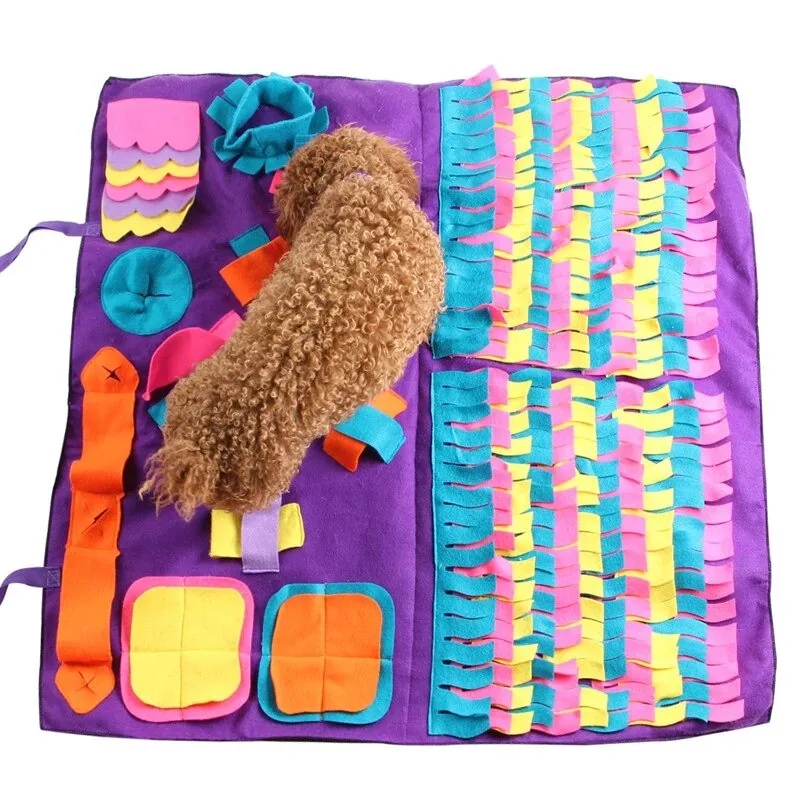
| Snuffle mat | Polar fleece strips sewn onto Oxford cloth, often with a rubber-dot base | Strips pulled loose, base slides on hard floors, colors run in the wash | Strip density, edge stitching, one wash test |
| Treat ball or wobbler | ABS or PP shell, TPR or rubber parts | Cracked shell, halves unscrew, kibble jams or pours out too fast | Wall thickness, opening size against real kibble, drop test |
| Rubber treat toy | Natural rubber or TPR | Chunks bitten off, strong chemical smell | Hardness against your approved sample, smell, tear resistance |
| Lick mat | Silicone or TPR | Suction cups let go, corners tear | Food-contact test report, thickness, corner tear |
| Slider or spinner board | PP or ABS, sometimes wood | Sliders pop off, sharp edges left from the mold | How firmly sliders are held, burrs, non-slip feet |
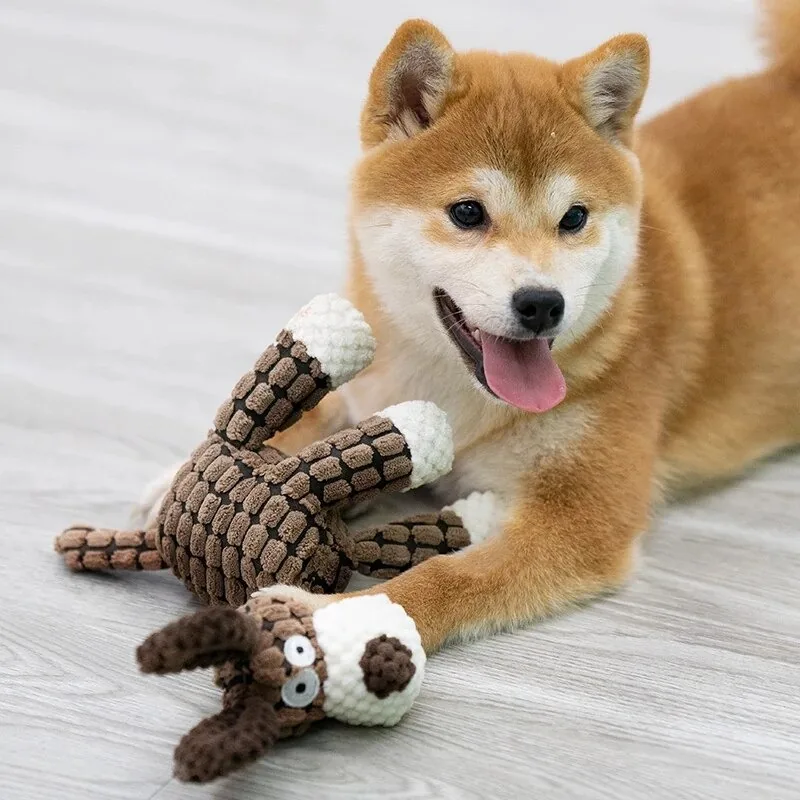
| Hide-and-seek plush | Polyester plush or corduroy, plastic squeakers | Seams split, squeakers get swallowed, plastic eyes come off | Seam strength, squeaker inside an inner pouch, embroidered eyes |
For a new store, snuffle mats and treat dispensers are the easier start: they suit most dogs, and a dog working one out makes good short video. Plush and rubber chew toys collect the most "destroyed in ten minutes" reviews. If you sell them, label them honestly by chew strength (light or moderate chewers) and never call anything "indestructible".
What US rules apply to dog toys
Pet toys sit in a gray zone, and it's easy to assume there are no rules at all. Here is what applies in practice:
- No pet-toy-specific federal standard. The children's toy standard (ASTM F963) is mandatory for children's toys, not for pet toys. Many brands still use it as a voluntary benchmark, and large pet retailers set their own supplier requirements on top.
- General consumer product rules still apply. The Consumer Product Safety Commission can act against any unsafe consumer product. In 2025 a laser-pointer pet toy was recalled in cooperation with the CPSC, and the agency warned consumers to stop using a cat toy, both because their button or coin batteries broke the federal rules for products containing those batteries (Reese's Law). Any toy with a battery needs a compartment that takes a tool to open, plus the required warnings.
- Don't make it look like a kids' toy. If a toy looks and sells like a plaything children would reasonably use, it risks being treated as a children's product, which brings in much stricter testing. Design, name and market it clearly for dogs.
- California Prop 65. Businesses with 10 or more employees must warn California buyers when a product exposes them to listed chemicals, such as the phthalate DEHP or lead. Settlements have already covered dog toys and training bumpers. Smaller sellers are exempt, but marketplace or retailer contracts can still require compliance. Online, the warning must reach the buyer before checkout.
- Food contact. Lick mats and treat toys touch food. Ask silicone and rubber suppliers for a test report against FDA 21 CFR 177.2600, the rule for rubber articles in repeated contact with food.
As the seller, you are the one customers and regulators come to. Ask the factory for existing test reports from an accredited lab, and check that the photo, item number and date on the report match your product. A report for "similar items" from four years ago proves nothing.
Test durability on samples first
Durability problems are cheap to find at sample stage and expensive to find in reviews. Order two or three samples of the same toy from two suppliers and put them side by side:
- Smell and touch. A strong chemical smell or a sticky surface on rubber or TPR is a reason to reject the sample.
- Pull everything that's attached. Ears, legs, tags, rope knots, slider pieces. Pull hard by hand. Anything that loosens will come off in a dog's mouth.
- Press and flex. Push a thumbnail into rubber parts and bend them. They should spring back without whitening or cracking. Compare hardness between the samples.
- Drop the hard parts. Drop plastic dispensers onto a tiled floor a few times. Check for cracks and that screw-together halves stay locked.
- Run real kibble through it. Use the kibble size your customers feed. Too small and the toy empties in seconds; too big and the dog gives up.
- Wash it once. Wash a snuffle mat or plush the way your care label will say. Look for shrinkage, color run and opened seams.
- Give it to a dog and film it. Supervise the session. If a moderate chewer gets pieces off, drop the toy or relabel it for light chewers. The clip doubles as product content for your store and social media.
The sample you approve becomes your reference ("golden sample"). Every batch is compared against it, so keep it.
QC checklist for every batch
Factories change materials and subcontractors between orders more often than they admit. Check each batch on arrival:
- Color, size, hardness and smell match the golden sample.
- No small parts that can be pulled off; eyes and noses embroidered or firmly fixed.
- Plush seams closed and even, with no gaps; squeakers sealed inside an inner pouch.
- Molded parts free of sharp flash and burrs; screw-together parts tighten fully.
- Treat openings the same size across units.
- Suction cups and non-slip bases grip a smooth surface.
- Battery compartments closed with a screw.
- Hang tags or inserts present, with the size and chew level matching your listing.
- Carton counts match the packing list.
Our inspection service covers these checks, with photos of what we find.
Packaging that prevents returns
Packaging for dog toys does two jobs: it protects the toy, and it sets the buyer's expectations so a chewed toy doesn't turn into a refund claim.
- Put the basics on the tag or insert: material, dog size or weight range, chew level, care instructions, and "Supervise play. Remove the toy if it is damaged. Not a children's toy."
- Bag rubber and plush items individually so they arrive clean and don't pick up smells from other goods.
- Roll or fold snuffle mats tightly. Soft, bulky items are often charged on size rather than weight, so a smaller parcel saves money on every order.
- Build bundles. A treat dispenser plus a lick mat makes a natural "rainy day" set. Kit bundles in advance so each order ships as one item.
Branded mailers and hang tags are covered in our custom packaging guide.
Shipping and landed cost
Most puzzle toys are light and fit a padded mailer, which keeps shipping cheap. Remember that the US $800 duty-free rule no longer covers parcels from China, so every order pays duty. Price on landed cost (product, shipping, duty and fulfillment) and ship duties paid, so your customer is never asked for money at the door. Once a toy sells every day, moving stock to a US warehouse gives 1–5 day delivery. More on that in our international shipping guide.
If you also plan to sell treats alongside the toys, read our guide to pet food from China first. Food comes under different rules from toys.
How PackQuay helps
We source pet toys from factories in China, compare samples against your approved one and inspect 20% of every batch free, with full inspection at $7 per person per hour. We can bag, tag and kit bundles in our Xinxiang warehouse, store your stock free for the first 2 months, and ship each order with your branding. Send us the toy links you're considering on WhatsApp and we'll come back with samples, photos and a landed-cost quote.
FAQ
Are dog toys regulated in the US?
There is no federal safety standard written specifically for pet toys, but general consumer product rules still apply, including the federal rules for products containing button or coin batteries. California's Prop 65 can also require warnings if a toy contains listed chemicals such as certain phthalates or lead.
What material is best for dog puzzle toys?
It depends on the toy: fleece for snuffle mats, PP or ABS for hard dispensers, natural rubber or TPR for chew toys and silicone for lick mats. More important than the material name is a recent lab report for your exact item and a sample that passes your own pull, flex and smell checks.
How do I know if a dog toy is durable enough to sell?
Order samples from two suppliers, pull every attached part, flex the rubber, drop the hard parts and give the toy to a dog under supervision. If a moderate chewer gets pieces off, don't sell it, or label it clearly for light chewers only.
Should I sell dog toys as "indestructible"?
No. No toy is indestructible, and the claim invites refund requests and bad reviews. Label toys by chew level and include a "supervise play, remove if damaged" warning.
How much of each batch does PackQuay inspect?
20% of every batch is inspected free. If you want every unit checked, extra inspection costs $7 per person per hour, and you get photos of any problems.