
SKU in Inventory Management: UPC, FNSKU and Multi-Warehouse Stock
Quick answer: In inventory management, the SKU is the key every stock record hangs on: counts, locations, reorder points, costs and sales are all tracked per SKU. Other codes sit alongside it with different jobs. A UPC or EAN is a global product number licensed from GS1. An FNSKU is Amazon's label that ties a unit to your seller account. An ASIN is Amazon's catalog number. When you hold stock in several warehouses or buy from several suppliers, keep one master SKU per sellable item and record the location and the supplier as separate fields, never as new SKUs.
The codes on one product, and what each one does
| Code | Who issues it | Format | What it identifies | When you need it |
|---|---|---|---|---|
| SKU | You | Your own pattern of letters and numbers | Each sellable variant in your business | Always |
| UPC (GTIN-12) | GS1; in the US, GS1 US | 12 digits | The product, identical in every store | Retail and most marketplaces |
| EAN (GTIN-13) | GS1 offices outside the US and Canada | 13 digits | The same as a UPC | Retail outside North America |
| FNSKU | Amazon | Seller-specific labels start with X00 | A unit owned by your seller account inside FBA | Sending stock to Amazon FBA |
| ASIN | Amazon | 10 characters | A product page in Amazon's catalog | Selling on Amazon |
| Supplier item number | The factory or listing | Anything | That supplier's version of the item | Reordering |
| Batch or lot number | You or the factory | Anything | One production run | Tracing defects and returns |
A few facts worth knowing before you buy barcodes. GS1 US licenses a single GTIN for a one-time $30 with no renewal fee, and a Company Prefix starts at $250 for 10 numbers plus $50 a year. A 12-digit UPC becomes a valid EAN-13 by adding a leading zero. Amazon checks submitted UPCs against the GS1 database, so numbers bought cheaply from resellers can get a listing rejected.
The FNSKU rules changed this year. Since March 31, 2026, Amazon no longer pools identical units from different sellers. If you are not the Brand Representative for a product in Amazon Brand Registry, every unit you send to FBA needs an FNSKU label, even if it already carries a manufacturer barcode. Our FBA prep service applies FNSKU labels at $0.10 per unit before your stock leaves China.
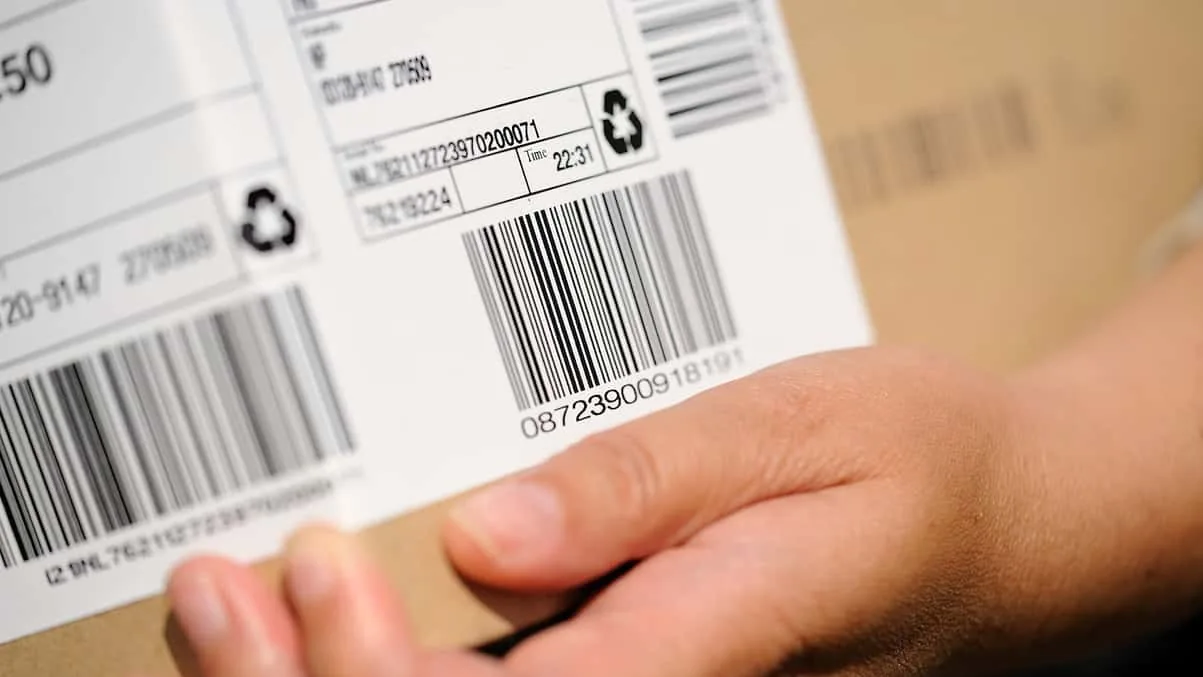
Tie every code to one master SKU
The SKU is the join key. Every other code is an attribute stored against it. For a black crew-neck T-shirt in medium, the record might look like this:
| Field | Value |
|---|---|
| Master SKU | TEE-CRW-BLK-M |
| UPC | 12 digits from your own GS1 prefix |
| FNSKU | X00 label generated in Seller Central, if you use FBA |
| Supplier A item number | The first factory's code |
| Supplier B item number | The second factory's code |
| Shopify or WooCommerce variant | The same master SKU in the SKU field |
| Fulfillment warehouse | The same master SKU, mapped once when your store connects |
If your store, spreadsheet, warehouse and Amazon account all use the same SKU, you can add up stock and sales across all of them in one place. If each uses its own code, you'll spend every month-end reconciling.
One SKU, several warehouses
Stock is counted per SKU per location. Here is an example for one SKU split across three locations, plus a shipment on the water:
| TEE-CRW-BLK-M | On hand | Reserved for open orders | Available |
|---|---|---|---|
| China warehouse | 420 | 35 | 385 |
| US 3PL | 180 | 12 | 168 |
| Amazon FBA | 240 | Tracked by Amazon | As shown in Seller Central |
| In transit to US 3PL | 300 | None | 0 until received and counted |
Rules that keep this honest:
- Never create location SKUs such as TEE-CRW-BLK-M-US. Location is a field. Separate SKUs split your sales reports and confuse your store.
- Treat in-transit stock as its own status. Don't let your store sell it until it has been received and counted.
- Route orders by location. Stock in a US warehouse serves customers who need fast delivery; China stock covers the rest and refills the US shelf.
- Reconcile every inbound shipment per SKU: units sent against units received, and chase the gap the same week.

One SKU, several suppliers
Buying the same item from two factories is good risk management, but it tests your SKU discipline.
- Same approved spec, no visible difference: keep one SKU. Record the supplier on each purchase order and batch.
- Anything the customer could notice differs, such as shade, material, weight or packaging: give it a new SKU or a version suffix such as V2.
- Cost per SKU should come from each batch's landed cost, weighted by units, so a cheaper second supplier shows up in your margins.
When complaints about one SKU rise, the batch records tell you which factory and which production run they came from. The SKU alone can't.
Reorder points per SKU: a worked example
The standard formula is: reorder point = average daily sales × lead time in days + safety stock.
Take an example SKU that sells 12 units a day. From placing a reorder to having checked units on the shelf in China takes 10 days, covering production, delivery to the warehouse and inspection. You want 5 days of safety stock, which is 60 units.
Reorder point = 12 × 10 + 60 = 180 units. When available stock in China drops to 180, place the next order.
Run the same sum separately for each location. A US warehouse refilled from China has a much longer lead time, because freight and customs clearance come on top, so its reorder point is far higher for the same daily sales. Recalculate every month, or whenever a promotion changes your sales rate.
SKU habits that keep inventory accurate
- Count a few SKUs every week instead of everything once a year.
- Retire old SKUs for good; never give a code to a new product.
- Set bundles up as kits made of component SKUs, so the parts' stock drops when a kit sells.
- Keep one system as the source of truth for stock and let the others read from it. Our guide to fulfillment software after you outsource explains why.
- Flag SKUs that hold stock but haven't sold in 60 days, before storage costs pile up.
Still setting up your codes? Start with what SKU stands for and how to write SKU codes.
How PackQuay helps
Your SKUs are mapped once when we connect your store, and your account manager can send stock levels by SKU and warehouse. Stock in our Xinxiang warehouse is free to store for the first 2 months, and steady sellers can move to one of 18+ overseas 3PL warehouses for 1–5 day delivery. For Amazon, we apply FNSKU labels per unit before shipping. Ask on WhatsApp and we'll help you set up a SKU map that works across all your locations.
FAQ
What is a SKU in inventory management?
A SKU is the internal code that identifies each distinct item you stock. Inventory systems track counts, locations, costs, reorder points and sales per SKU, so it is the key that links all your stock records together.
What is the difference between a SKU and a UPC?
You create a SKU yourself and it only means something inside your business. A UPC is a 12-digit product number licensed from GS1 that identifies the same product in every store and is printed as a barcode.
What is the difference between a SKU and an FNSKU?
An FNSKU is a code Amazon generates to link a unit in its fulfillment centers to your seller account. Since March 31, 2026, sellers who are not the Brand Representative for a product must label every unit sent to FBA with its FNSKU.
Should the same product have different SKUs in different warehouses?
No. Keep one SKU per item and track stock per location. Separate location SKUs split your sales data and make it easy for your store to oversell.
How do I calculate a reorder point for a SKU?
Multiply average daily sales by the lead time in days, then add safety stock. A SKU selling 12 a day with a 10-day lead time and 60 units of safety stock should be reordered when stock falls to 180.