What Is Reverse Dropshipping? Meaning, Pros, Cons and 2026 Rules
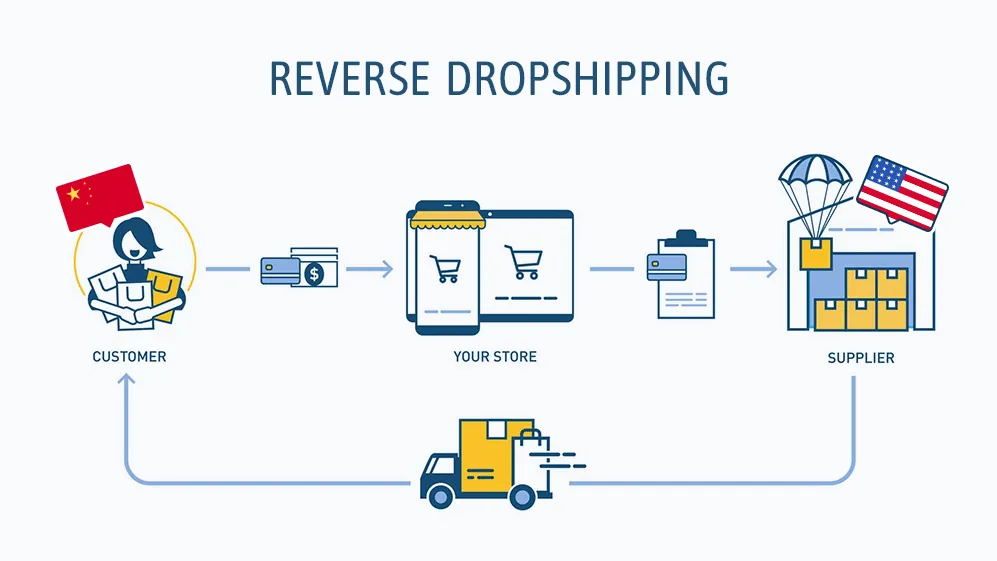
Quick answer: Reverse dropshipping flips the usual direction of dropshipping. Instead of sourcing in China and selling to customers in the US or Europe, you source from suppliers in the US, Europe, Japan or Australia and sell to consumers in China or other Asian markets, with the supplier shipping each order across the border. The appeal is real demand for foreign brands and authentic imported goods at higher price points. The reality is that selling into China is tightly regulated: consumer imports at scale go through China's cross-border e-commerce retail import channel, with per-person limits of RMB 5,000 per order and RMB 26,000 per year, a list of eligible products and a registered domestic agent. Add Chinese-language marketing, local platforms and payments, long cross-border delivery and tariffs that have changed repeatedly since 2025, and it's a different business, not a simple reversal.
Reverse vs. conventional dropshipping
| Conventional dropshipping | Reverse dropshipping | |
|---|---|---|
| Source | China and other manufacturing hubs | US, Europe, Japan, Australia and other brand markets |
| Customers | US, Europe and other high-income markets | China and other Asian markets |
| Typical products | Unbranded or private-label goods at low unit cost | Branded goods valued for authenticity: cosmetics, supplements, baby care, fashion |
| Price point | Low to mid | Mid to high |
| Where you sell | Your own store, Amazon, TikTok Shop | Cross-border import marketplaces and social commerce in the buyer's market |
| Import rules that matter | US duties on every parcel since 2025 | China's cross-border retail import limits, product list and taxes |
| Returns | Usually refunded or replaced locally | Cross-border, slow and costly |
How a reverse dropshipping order works
- You list a product from a Western supplier on a channel Chinese shoppers use, priced in yuan.
- A customer orders and pays. For cross-border import orders, the buyer's identity is checked.
- You place the order with the supplier, which ships it, often through a cross-border logistics provider.
- The parcel clears Chinese customs under the channel's rules, with tax collected on the order.
- A domestic carrier delivers it, and you keep the margin after product, shipping, tax and platform fees.
Selling into China: the two routes for consumer parcels
| Cross-border e-commerce retail import | Personal postal items | |
|---|---|---|
| Meant for | Businesses selling to Chinese consumers | Personal-use items in reasonable quantities |
| Value limits | RMB 5,000 per transaction; RMB 26,000 per person per year | RMB 2,000 per parcel (since December 1, 2024) |
| Tax within limits | 0% tariff; import VAT and consumption tax at 70% of the normal amount | Postal articles tax at 13%, 20% or 50% by product type; tax of RMB 50 or less is waived |
| Products | Must be on China's cross-border retail import list | Personal-use goods |
| Who must register | The overseas seller appoints a domestic agent registered with customs; platforms verify buyers | Not designed for commercial sellers |
Inside the cross-border channel, a single item over RMB 5,000 can still come in if the buyer is within the yearly limit, but full duty and taxes apply. Once a buyer passes the yearly limit, further purchases can't use the channel. For a product with 13% VAT and no consumption tax, the tax within the limits works out to 9.1% of the taxable value.
What this means for a would-be reverse dropshipper: shipping resale goods one by one as "personal parcels" isn't what that route is for. Selling at any real volume means working through a cross-border import platform or a registered agent, checking that each product is on the eligible list, and pricing the tax in. Get advice from a customs broker or a cross-border service provider in China before you list anything.
The tariff picture in 2026
Trade measures between the US and China have changed many times since 2025. In November 2025 China said it would keep an additional 10% tariff on US-origin goods while suspending a further 24% for one year, and in September 2026 the two governments agreed to extend their trade truce to January 10, 2027. The official notices we found don't spell out how these additional tariffs interact with the 0% tariff inside the cross-border retail limits, so confirm the current treatment for your product and channel before you price. These measures target goods of US origin, so where a product was made matters, not only where it ships from.
The conventional direction changed too. Parcels from China no longer enter the US duty-free: the $800 exemption ended for China and Hong Kong in May 2025 and for all countries in August 2025, and the law repeals it permanently from July 1, 2027. Reverse dropshipping isn't a way around US duties, though. It's a different market with its own costs.
The pros
- Demand for authenticity. Buyers who want the genuine imported version of a brand are paying for trust, which supports higher prices.
- Higher order values. Branded goods sell at prices where shipping and fees are a smaller share of the order.
- A different competitive set. You aren't competing with thousands of stores selling the same unbranded product.
- No stock to hold, as with any dropshipping model.
The cons
- Regulation. Product lists, buyer limits, registration and categories with their own rules, such as cosmetics, food and supplements.
- Channels. Chinese shoppers buy through local marketplaces and social apps, not your Shopify store. Marketing has to happen in Chinese, on their platforms.
- Brand permissions. Many brands restrict who may resell their products and where. Check supplier terms before listing.
- Slow, costly logistics for single parcels, and returns that cross the border twice.
- Payment and currency. You'll need payment methods local buyers use and a plan for currency swings.
- Policy risk. Tariffs and trade terms have moved repeatedly; a price that works today may not next quarter.
Other Asian markets
Reverse dropshipping also targets markets such as Japan, South Korea and Southeast Asia. Each has its own duty-free threshold, consumption tax, restricted product list and favored marketplaces, so research each market's import rules separately. Don't assume China's cross-border limits apply anywhere else.
Is reverse dropshipping for you? A quick check
- Can you market in the buyer's language, on the platforms they use?
- Do you have suppliers who allow resale into that market, in writing?
- Are your products on the eligible import list, and outside categories that need extra approvals?
- Have you priced in tax, cross-border shipping, platform fees and currency risk?
- Do you have a registered partner or platform to handle import declarations?
If several answers are "no", the conventional direction, sourcing in China and selling to Western customers, is the simpler business to build.
Where PackQuay fits
PackQuay works in the conventional direction: we source from factories in China, inspect and pack in our own warehouse in Xinxiang, and ship to your customers abroad on 30+ lines. If reverse dropshipping caught your eye because US duties squeezed your margins on China-sourced products, compare both on landed cost before switching direction. Our profit margin guide shows the math, and moving steady sellers to an overseas warehouse, covered in our guide to scaling a dropshipping business, is often the better fix. For the basics of the model itself, see what ecommerce dropshipping is. Questions? Message us on WhatsApp.
FAQ
What is reverse dropshipping?
Dropshipping in the opposite direction from usual: sourcing products from suppliers in the US, Europe or other brand markets and selling them to consumers in China or other Asian markets, with the supplier shipping each order across the border.
Is reverse dropshipping legal in China?
Selling imported goods to Chinese consumers is legal through the proper channels. Business sales at scale go through China's cross-border e-commerce retail import system, which requires a registered domestic agent, eligible products and tax on each order, within per-person limits.
What are China's limits for cross-border e-commerce imports?
RMB 5,000 per transaction and RMB 26,000 per person per year. Within those limits the tariff is 0% and import VAT and consumption tax are charged at 70% of the normal amount; the product must also be on the eligible import list.
Is reverse dropshipping more profitable than regular dropshipping?
Not automatically. Branded goods sell at higher prices, but taxes, cross-border shipping, platform fees, local-language marketing and policy risk all come out of the margin. Compare both models on full landed cost before you choose.
Do tariffs affect reverse dropshipping from the US to China?
They can. In November 2025 China kept an additional 10% tariff on US-origin goods and suspended a further 24% for one year, and in September 2026 the two governments extended their trade truce to January 10, 2027. How these tariffs apply to cross-border retail orders isn't clearly set out, so confirm with a customs broker for your product.