
Multi-Product Branding vs Multi-Branding: When to Add a Brand
Quick answer: Multi-product branding means selling many different products under one brand name, so every sale builds the same name. Multi-branding means one business runs several separate brands, each with its own name, customers and positioning, so it can serve different segments without confusing them. For a small online store, one brand is the sensible default: it costs less and every review and repeat order strengthens a single asset. Add a second brand only when a product line needs a different customer, price level or promise that would weaken your first brand if it carried the same name.
The terms, at the size of an online store
Textbooks explain these strategies with global consumer-goods groups that own dozens of labels. Here is what they look like for a seller running a Shopify or WooCommerce store. The brand names below are placeholders.
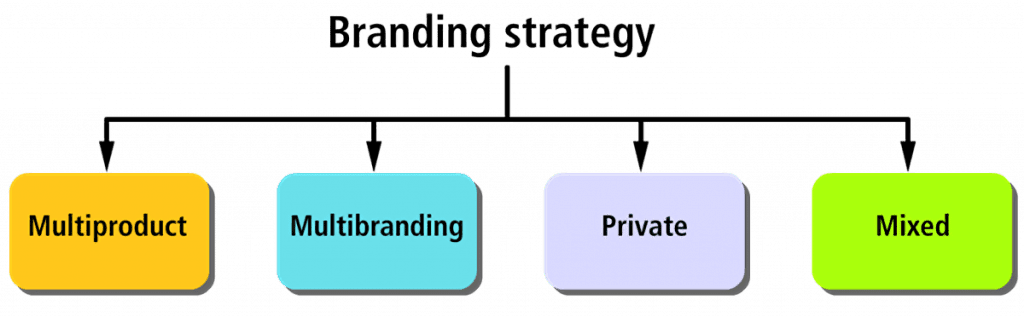
- Multi-product branding, also called family, umbrella or "branded house" branding: one name on everything. Brand A sells dog beds, collars, bowls and travel crates, all as Brand A. A customer who liked the bed already trusts the collar.
- Multi-branding, or a "house of brands": one owner, several independent names. The owner of Brand A also runs Brand B, a separate store selling desk organizers to people who work from home. Customers of one rarely know the other exists.
- Endorsed sub-brand: the middle path. A new line gets its own name but borrows trust from the parent, as in "Trail, by Brand A" for outdoor dog gear.
- Mixed branding: a business sells some goods under its own brand and some under other people's. A factory that sells its own label and also makes private label products for online sellers is the classic case.
Side-by-side comparison
| Multi-product branding | Multi-branding | |
|---|---|---|
| Brand names | One | Several, independent |
| A new product launches with | The trust, reviews and email list you already have | Nothing: no reviews, no list, no ad history |
| Marketing spend | Every dollar builds the same name | Split across brands |
| If one product flops or gets bad press | The whole name can suffer | The damage stays with that brand |
| Stores, domains, social accounts | One set | One set per brand |
| Trademark filings | One name to protect | One filing per name, per class, per country |
| Packaging and inserts | One design system | Separate designs, minimums and stock per brand |
| Best for | Small and growing stores with one customer type | Businesses serving clearly different customers or price levels |
What a second brand really costs a small store
A second brand doesn't add one cost. It duplicates most of your fixed costs and resets your learning:
- Trademark. The USPTO base application fee is $350 per class of goods, so a brand selling in two classes starts at $700, before any other country you sell in.
- Store and apps. On Shopify, every store below the Plus plan is billed as its own subscription, and most apps charge per store.
- Ad accounts and audiences. New pixels, new social handles and no purchase history for the ad platforms to learn from.
- Packaging. Printed mailers, boxes and inserts are ordered in batches per design, so two brands means two sets of minimums and two piles of stock.
- Content. Product photos, videos, emails and customer service replies in a second voice.
- Your attention. The cost most sellers underestimate. Two half-built brands usually earn less than one finished one.
When one brand can stretch
Adding a product to your existing brand is usually right when it serves the same customer, sits at a similar price level and keeps the same promise. A dog-accessories brand adding a car seat cover for dogs is a natural stretch: same buyer, same reason to buy, and the reviews on your bed help sell the cover.
A quick gut check: would your best existing customer be surprised to see the new product in your store? If not, extend the brand.
When a second brand makes sense
- A different customer. The new line is for someone your current brand doesn't talk to, such as a pet brand that wants to sell home-office products.
- A different price level. A budget line drags down a premium name, and a premium line under a budget name won't be believed.
- A conflicting promise. If Brand A stands for durable, natural materials, a cheap plastic novelty undermines every word on its About page.
- Risk you want to isolate. A category with more regulation, returns or review risk can sit under its own name, so a problem there doesn't reach your main brand.
- A line you may sell separately. A brand with its own store, customer list and trademark is much easier to hand over or sell than a section of a bigger store.
A 7-question test before you launch a second brand
- Would your current best customer buy the new product?
- Would carrying it change what your current brand stands for?
- Is it priced in roughly the same range as what you sell now?
- Does your first brand already have steady sales and repeat customers?
- Can you fund a second set of fixed costs for several months before it pays back?
- Could an endorsed sub-brand ("X, by Brand A") do the job instead?
- Who will run the second brand day to day?
How to read it: if question 1 is yes and question 2 is no, extend your current brand. If question 2 is yes but question 4 is no, finish the first brand before starting another. A second brand is justified when 2, 4 and 5 are all yes and question 6 doesn't offer a cheaper route.
Running two brands from one supply chain
The customer-facing side of each brand has to stay separate. The back end doesn't, and sharing it is where a multi-brand seller saves money.
- Shared sourcing. A factory doesn't care which logo goes on the box. At PackQuay the sourcing fee is a percentage of the product cost in each transaction, falling from 10% up to $5,000 to 4% above $200,000, so combining purchases for both brands can move you into a lower tier.
- Packaging per SKU. Give each brand's SKUs their own prefix (see how to write SKU codes) and assign mailers and inserts per SKU, so a Brand B order never leaves in a Brand A mailer.
- Several stores, one account. Connect each brand's Shopify or WooCommerce store to the same fulfillment account and keep orders, stock and invoices visible per store.
- Separate details the customer sees. Return address, insert text, email sender name and customer service signature should all match the brand on the parcel.
Before you split anything, make sure your first brand is genuinely a brand and not a store with a logo. Our explainer on what an ecommerce brand is includes a quick self-test.
How PackQuay helps
You can connect several Shopify and WooCommerce stores to one PackQuay account. Each brand's packaging and inserts are assigned per SKU in our Xinxiang warehouse, so both brands ship correctly from the same shelves. Branded and private label sourcing adds 2.5% to the sourcing fee, and 20% of every batch is inspected free. Message us on WhatsApp if you're weighing a second brand and want both brands' costs per order side by side.
FAQ
What is the difference between multi-product branding and multi-branding?
Multi-product branding puts one brand name on many different products. Multi-branding means one company owns several separate brands, each with its own name, positioning and target customers.
Which strategy is better for a small ecommerce business?
Usually multi-product branding. Every sale and review builds the same name, and you pay for one trademark, one store and one set of packaging. Multi-branding makes sense when a new line needs a different customer, price level or promise.
What is an example of multi-branding?
One owner running a pet accessories store and a separate home-office store under different names, each with its own website, social accounts and packaging. Large consumer-goods companies do the same at scale with several competing brands in one category.
How much does it cost to start a second brand?
The fixed costs repeat. A US trademark application starts at $350 per class of goods at the USPTO, a second Shopify store below the Plus plan is a separate subscription, and printed packaging is ordered per design. Content and ad learning also start again from zero.
Can one fulfillment partner ship orders for two brands?
Yes. Packaging and inserts are assigned per SKU, so each brand's orders go out in their own materials, and several stores can connect to one account.