
Fulfillment Center vs Warehouse: 8 Differences and Which to Use
Quick answer: A warehouse is built to hold goods, usually in bulk and for weeks or months, and it ships them out by the carton or pallet to other businesses. A fulfillment center is built to ship: stock stays for a short time and leaves as individual parcels to consumers, with picking, packing, labels and returns done on site. Every fulfillment center has storage, but not every warehouse can fulfill orders. If you sell online one unit at a time, you need fulfillment. If you are parking stock or supplying retailers, plain warehousing costs less.
The 8 differences in one table
| Warehouse | Fulfillment center | |
|---|---|---|
| 1. Main job | Keep goods safe until they're needed | Get orders out the door fast |
| 2. Who it ships to | Businesses: stores, distributors, marketplaces' warehouses | Consumers who bought online |
| 3. Unit handled | Pallets and full cartons | Single units and small parcels |
| 4. How long stock stays | Weeks to months, sometimes longer | Days to weeks |
| 5. How success is measured | Space used well, nothing lost or damaged | Orders dispatched on time and picked correctly |
| 6. Services | Receiving, storage, loading out | Receiving, storage, pick and pack, kitting, labels, carrier handover, returns |
| 7. How you pay | Per pallet or cubic meter per month, plus handling in and out | Per order and per extra item, plus storage, packaging and shipping |
| 8. Link to your store | Usually none; you send instructions per shipment | Takes your orders daily and returns tracking numbers |
The quickest test is row 3. Ask a facility whether it can pick one unit of one SKU, pack it in a mailer and put a label on it today. A pure warehouse will say it moves cartons. If you want to know what happens inside a facility that says yes, read what an ecommerce fulfillment center is.
Where distribution centers and other "warehouses" fit
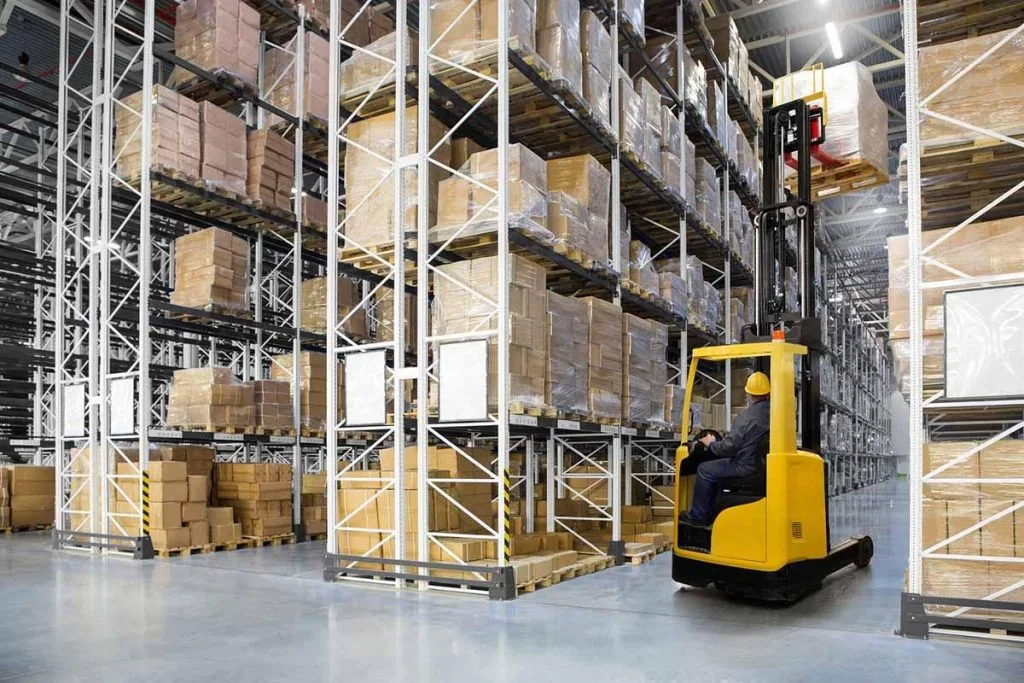
"Warehouse" is also used as a catch-all. These are the variants an online seller is most likely to run into:
| Type | What it does | Relevant to you when |
|---|---|---|
| Storage warehouse | Holds bulk stock at low cost per cubic meter | You buy seasonal stock early or hold reserve inventory |
| Distribution center | Moves stock quickly to shops and other businesses, often in mixed cartons | You sell wholesale or to retail chains |
| Fulfillment center | Ships single orders to consumers | You sell online, direct to buyers |
| Bonded warehouse | Holds imported goods under customs control before duty is paid | You import large volumes into the US and sell over a long period |
| Overseas 3PL warehouse | Stores your stock in your customers' country and usually fulfills orders too | A product sells steadily enough to ship in bulk ahead of demand |
On bonded warehouses: US Customs and Border Protection (CBP) allows imported goods to sit in a bonded warehouse for up to five years from import, with duty collected only when they are withdrawn for sale in the US. It is a tool for larger importers, and it doesn't make the duty go away, it only delays it.
How the bills differ
A warehouse bills you for space and moves. A fulfillment center bills you for work per order, plus space. That changes which one is cheaper for a given product:
- Slow mover, sitting for months: storage cost dominates. A warehouse priced per cubic meter is usually the cheaper home.
- Fast mover, shipped one by one: per-order handling dominates. You need fulfillment anyway, so storing it in the same building avoids paying to move it twice.
- Both in one catalog: look for a provider that does both, with long-term storage priced separately from active stock.
At PackQuay, storage is free for your first 2 months and stays free while you have orders to process; stock held longer is priced per cubic meter. Pick and pack starts at $2.00 per order and drops to $1.00 as your daily order count rises. Example only: a day with 20 single-item orders costs $39.70 in pick and pack (19 orders at $2.00, then one at $1.70). See storage and warehousing and pricing.
Which one do you need?
- You sell online and ship single orders to consumers: a fulfillment center.
- You bought a large batch early for the holidays: storage now, fulfillment later. Ideally the same building, so stock isn't trucked across town in November.
- You supply shops or distributors in cartons: a warehouse or distribution center.
- You send stock to Amazon FBA: you need carton work, not parcel work. A China warehouse can label units, pack to Amazon's requirements and ship them to Amazon's warehouses; see Amazon FBA prep.
- You do several of these: one provider for storage and fulfillment saves double handling and two sets of stock records.
For how long to hold stock and what it costs, see short-term vs long-term storage.
Five questions that reveal what a facility really is
Plenty of warehouses add "fulfillment" to their website. These questions show whether they are set up for it:
- Can you pick single units, or only full cartons?
- How do my orders reach you, and how do tracking numbers come back to me?
- If an order reaches you in the morning, when does it leave?
- Can you pack in my branded boxes and add insert cards?
- What happens to a returned parcel?
A real fulfillment operation answers all five without hesitating. If the answers are vague, you are talking to a storage business. The terms 3PL and fulfillment get mixed up in the same way; 3PL vs fulfillment sorts those out.
PackQuay: storage and fulfillment under one roof
Our warehouse in Xinxiang, Henan is both. Bulk stock is received, inspected (20% of each batch free) and stored, and single orders are picked, packed and dispatched from the same shelves, with stocked orders leaving within 24 hours, or 48 at peak. Message us on WhatsApp and we connect your Shopify or WooCommerce store for you. Orders come in automatically, and tracking numbers go back to your store once parcels ship. You can also send orders as a CSV or Excel file. When a product sells steadily, it can move to one of 18+ overseas 3PL warehouses for 1–5 day delivery. Ask about your products on WhatsApp.
FAQ
What is the main difference between a fulfillment center and a warehouse?
A warehouse stores goods, usually in bulk, and ships them out by the carton or pallet. A fulfillment center ships single orders to consumers, so it adds picking, packing, labeling and returns on top of storage.
Is a distribution center the same as a fulfillment center?
No. A distribution center moves stock quickly to shops and other businesses, usually in cartons. A fulfillment center ships individual online orders to the people who bought them.
Is a warehouse cheaper than a fulfillment center?
For storage alone, usually yes, because you pay only for space and handling. But if the stock has to be shipped as single orders, you will pay for fulfillment somewhere, and moving it between two buildings adds cost and delay.
What is a bonded warehouse?
A customs-controlled warehouse where imported goods can be stored before duty is paid. In the US, CBP allows up to five years from import, and duty is collected when goods are withdrawn for sale in the country.
Can one provider handle both storage and fulfillment?
Yes. Many fulfillment providers store bulk stock and ship orders from the same building. At PackQuay, storage is free for the first 2 months and while you have orders to process, with long-term storage priced per cubic meter.