
Dropshipping Order Fulfillment: Every Step and Where It Breaks
Quick answer: Dropshipping order fulfillment is everything that happens between a customer paying in your store and the parcel reaching their door, while someone else handles the product. A typical order passes through eight steps: checkout, order sync, purchasing, inspection, packing, customs, carrier handover with tracking, and delivery. Most refunds and chargebacks trace back to four weak points: variants that aren't mapped to a supplier, suppliers that run out of stock, tracking that goes quiet, and duties nobody prepaid.
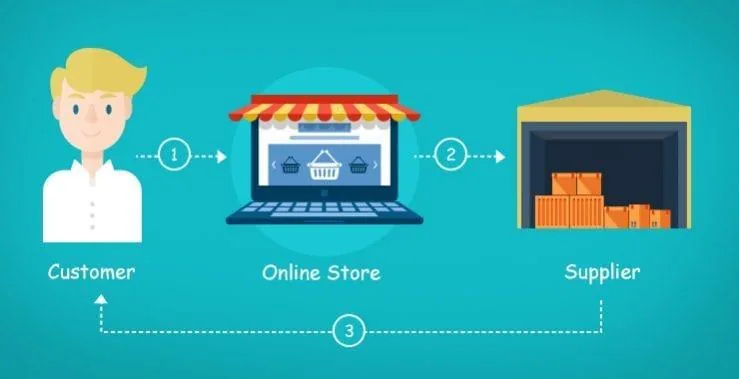
The eight steps of a dropshipping order
Here is the path an order takes when a fulfillment agent in China handles it for you. For each step: what happens, what tends to go wrong, and how to stop it.
1. Checkout
Your customer pays and the order lands in your store as unfulfilled. What breaks: typos in the address, missing apartment numbers, and fraudulent orders you only spot after the parcel has left. Fix: use address validation at checkout, and hold high-risk orders for a manual look before they are sent on. A parcel shipped to a bad address costs you twice: once to send and once to replace.
2. The order reaches your supplier or agent
The order should travel from Shopify or WooCommerce to your agent on its own, with no copying or spreadsheets. What breaks: you added a new color in the store but never linked it to a supplier SKU, so the order sits unassigned. Or the prepaid balance you keep with the agent runs dry and nothing moves. Fix: link every variant before you publish it, and set a low-balance alert.
3. Purchasing
If you hold no stock, the agent buys the item from the factory or wholesaler after the order arrives. What breaks: the supplier is out of stock, has dropped that color, or quietly changed a part. Fix: keep a backup supplier for each best seller, and ask your agent to report stock-outs the same day instead of waiting for you to notice. Build a few days into your promise here: at PackQuay, buying for no-stock orders takes 4–5 days on average after payment.
4. Receiving and inspection
The goods arrive at the agent's warehouse and should be checked before going anywhere. What breaks: wrong size, wrong color, scratches, missing parts. With no inspection, your customer becomes the inspector, and the review shows it. Fix: agree in advance on what gets checked. We inspect 20% of goods by default at no charge and send faulty or mismatched items back to the supplier.
5. Picking and packing
The right items are pulled, packed and labeled. What breaks: a three-item order leaves as three parcels from three suppliers, or a glass item travels in a thin poly mailer. Fix: work with an agent that merges multi-item orders into one parcel and lets you set the packaging for each SKU.
6. Customs and duties
Every international parcel carries a customs declaration listing contents and value. What breaks: the US no longer lets low-value parcels in duty-free. Chinese and Hong Kong parcels lost that exemption in May 2025, and parcels from anywhere else followed in August 2025. A parcel without prepaid duty can now be held, or the carrier bills your customer at the door. The EU changed too: since July 1, 2026, parcels worth €150 or less pay a flat €3 customs duty for each type of item inside, where before they paid none. Fix: get a landed cost per order, ship duties paid (DDP) to the US, and declare the real contents and value.
7. Carrier handover and tracking
The parcel goes to the carrier and the tracking number goes back to your store, which emails the customer. What breaks: the number is uploaded when the label is printed rather than when the parcel actually leaves, so the customer watches a tracking page with no scans for days. Or tracking covers only the China leg and goes dark at the destination border. Fix: ask exactly when tracking is pushed. Ours syncs only once the parcel has physically left, and with last-mile tracking switched on, your customer sees the local carrier instead of China transit legs.
8. Delivery and after-sales
The local carrier makes the delivery. What breaks: lost parcels, transit damage and returns. Sending a return back to China is slow and attracts duties, which is why we don't recommend it. Fix: set your policy before you need it. For cheap items, a reship or refund without a return is often simpler; for expensive ones, use a return address in the customer's country.
Cheat sheet: failure and prevention by step
| Step | Most common failure | Prevention |
|---|---|---|
| Checkout | Bad address, fraud | Address validation; hold risky orders |
| Order sync | Unlinked variant, empty balance | Link before publishing; balance alerts |
| Purchasing | Supplier stock-out | Backup supplier; same-day stock-out reports |
| Inspection | Wrong or damaged goods shipped | Agreed inspection rate, with photos |
| Packing | Split parcels, weak packaging | Merged parcels; packaging set per SKU |
| Customs | Duty billed to the customer, held parcels | Landed-cost quote; ship DDP |
| Tracking | No scans for days | Push tracking on real dispatch; last-mile tracking |
| Delivery | Lost parcels, costly returns | Clear claim process; local return address |
How long a dropshipped order should take
Customers judge you on the whole wait from payment to doorstep, which is processing time plus transit time. Processing is the part you control:
- No stock held: the agent has to buy the item first. At PackQuay that averages 4–5 days after payment, then packing and dispatch.
- Stock held at the agent's warehouse: the order skips purchasing and goes straight to packing. Our stocked orders leave within 24 hours (48 hours at peak).
- Stock held in an overseas warehouse: delivery in 1–5 days, because the parcel no longer crosses a border after the order is placed.
Transit depends on the shipping line and the destination, so show a delivery range at checkout that matches the line you actually use. Once a product sells every day, holding stock takes several days off every order. Dropshipping vs. ecommerce fulfillment works out when that switch pays for itself, and how third-party fulfillment works on Shopify explains what each status in your Shopify admin means while the order moves.
How PackQuay handles your orders
Orders from Shopify and WooCommerce import automatically, and other platforms can upload a CSV or Excel file. Our team in Xinxiang, Henan buys, inspects, packs and ships each order in your packaging, merges multi-item orders into one parcel, and pushes tracking only after the parcel has left. One account manager covers the whole chain, from the first sourcing quote to a lost-parcel claim. For the bigger picture of working with an agent, see China dropshipping agents in 2026, or send your product links on WhatsApp for a per-order quote.
FAQ
What is dropshipping order fulfillment?
It covers every step between a customer paying for a dropshipped product and that product arriving at their door. A supplier or agent does the physical work: buying or picking the item, packing it, shipping it and returning a tracking number to your store.
How long does dropshipping fulfillment take?
Total time is processing plus transit. Without stock, the item has to be bought first, which takes several days (4–5 on average at PackQuay); stocked orders can leave within 24 hours, and transit then depends on the shipping line.
Why are my dropshipping orders stuck as unfulfilled?
The usual causes are a store variant that isn't linked to a supplier SKU, an empty prepaid balance with your agent, a supplier stock-out, or an order held for a fraud check. Check those four first.
Who pays import duties on dropshipped orders to the US?
Someone always does now, because parcels from China no longer enter the US duty-free. Either you prepay the duty (DDP) and build it into your price, or the carrier may charge your customer before delivery.
How can I cut refunds caused by fulfillment problems?
Inspect goods before they ship, merge multi-item orders into one parcel, push tracking only when parcels actually leave, and show realistic delivery ranges at checkout.