Dropshipping vs Marketplace: Own Store, Marketplace or Both?
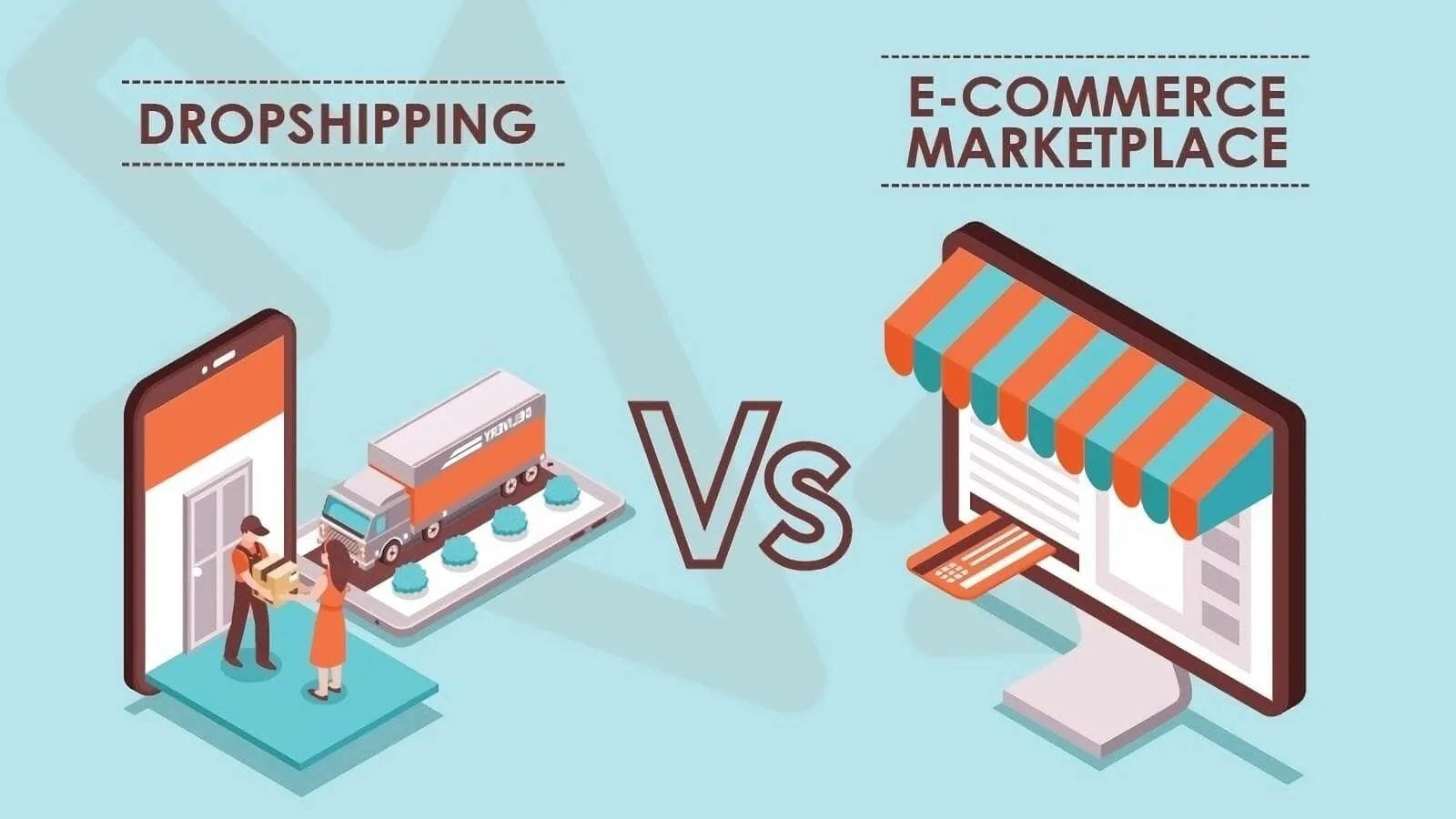
Quick answer: Dropshipping and a marketplace answer two different questions. Dropshipping is a fulfillment model: you sell an item you don't keep on a shelf, and a supplier or fulfillment partner ships it to your customer. A marketplace, such as Amazon, eBay, Walmart, Etsy or TikTok Shop, is a sales channel where many sellers list products to shoppers the platform brings in, in return for a fee. So the real choice is not "dropshipping or marketplace". It is where to sell (your own store, a marketplace or both) and how to fulfill (dropship or hold stock). Most big marketplaces accept dropshipping from a supplier you have an agreement with, but they ban buying from another retailer after the sale, and they judge you on shipping speed and tracking.
Two questions, four combinations
Every online seller makes two separate decisions. Where do shoppers find the product and pay for it? And who holds the stock and ships the parcel? Put the answers together and you get four setups:
| Dropship (a supplier or agent ships each order) | Hold stock (you or your 3PL ship) | |
|---|---|---|
| Your own store (Shopify, WooCommerce) | Little cash needed up front; you bring every visitor; you set the rules | Faster delivery, more cash tied up in stock; still your traffic |
| A marketplace (Amazon, eBay, Walmart, Etsy, TikTok Shop) | Allowed on most, under strict seller-of-record and delivery rules | The marketplace's home ground, and often the only route to fast-delivery badges |
Most stores that source from China move across this grid over time. They start by dropshipping through their own store, then add a marketplace listing or local stock once a product proves it sells.
Own store vs marketplace: what changes for a dropshipper
| Your own store | A marketplace | |
|---|---|---|
| Who brings the shopper | You: ads, content, email, social media | The marketplace's search and recommendations |
| What you pay to sell | Platform plan, payment processing and ad spend | A referral fee or commission on each sale, plus on-site ads if you want to be seen |
| Who owns the customer | You keep the email address and order history | Mostly the marketplace; its contact rules limit what you can send |
| Branding | Full control: site, packaging, insert cards | Mainly inside the listing; packaging rules vary by platform |
| Delivery rules | Your own promise, as long as it is honest | The platform's handling time, tracking and on-time targets |
| Account risk | Payment provider and ad accounts | A policy breach can suspend listings or the whole account |
The trade is simple. A marketplace rents you its traffic and its shoppers' trust, and in return you follow its rules and pay its fee on every order. Your own store makes you pay for traffic, but every customer you win stays yours, and the second order from that customer costs you nothing to acquire.
What marketplaces ask of dropshippers in 2026
Each platform words its policy differently, yet the same four rules keep coming up:
- You are the seller of record. Amazon's drop shipping policy says you must be the only seller named on packing slips, invoices and outer packaging, remove anything that identifies another seller or supplier before the parcel ships, and accept and process returns yourself.
- No retail arbitrage. Buying the item from another retailer after the sale and having that retailer ship it to your buyer is banned on Amazon and eBay, and TikTok Shop's US shipping requirements list it as fraudulent shipping. eBay explicitly allows fulfilling orders from a wholesale supplier.
- Delivery promises get measured. Handling time, valid tracking and on-time delivery feed your account health. A slow supplier quietly becomes your late-shipment rate.
- Location and duties must be honest. If a parcel ships from China, the listing and delivery estimate need to reflect that, and US duties now apply to every parcel from China, whatever its value.
The details differ enough that you should read the rules for your platform before you list. We cover them one at a time: Amazon, eBay, Walmart Marketplace, Etsy, TikTok Shop and Facebook Marketplace.
The same product on both channels: a worked example
Here is one product sold two ways. Every figure except the pick-and-pack fee is an assumption for illustration, not a quote. Your product cost, shipping line, duty rate and the platform's fee table will all change the result.
| Per order | Own store | Marketplace |
|---|---|---|
| Selling price (example) | $34.99 | $34.99 |
| Product cost (example) | $6.00 | $6.00 |
| Shipping from China (example) | $5.50 | $5.50 |
| US duties (example) | $2.00 | $2.00 |
| Pick and pack (PackQuay rate at 1–19 orders a day) | $2.00 | $2.00 |
| Landed cost | $15.50 | $15.50 |
| Payment processing (assumed 3%) | $1.05 | Inside the platform fee |
| Platform fee (assumed 15% referral fee) | None | $5.25 |
| Ad cost per order (assumed) | $10.00 | $3.00 |
| Left per order | $8.44 | $11.24 |
In this example the marketplace wins, because its traffic is cheaper than the ads the store needs. Two things can flip that. If the marketplace's delivery targets force the product into a US warehouse, you add bulk freight, import costs and storage, and you tie up cash in stock. And the store's number improves with every repeat buyer, because a returning customer carries little or no ad cost. Run the table with your own figures; our guide to dropshipping profit margins shows how to build landed cost line by line.
Which setup fits which stage
- Testing products: your own store, dropshipped from China. The least cash at risk, and no marketplace metrics to damage while you learn what sells.
- First steady seller: keep the store, and consider listing that one product on a marketplace if its delivery rules can be met from where the stock sits.
- Proven best seller: split the stock. Keep part in China for the store and the wider catalog, and send a bulk shipment to an overseas warehouse for marketplace orders and fast delivery.
- Building a brand: put your own store first. Marketplaces are good for reach, but customer data and repeat orders only build value in a store you control.
Thinking about running a marketplace yourself instead of selling on one? That is a different business with different duties. Start with what a multi-vendor marketplace is and how it works.
Mistakes that cost dropshippers their marketplace accounts
- Listing a product before you know which shipping line it will use and how long that line really takes.
- Letting a supplier's invoice, flyer or branded box reach the buyer.
- Fulfilling from a retail site because it was cheaper that day.
- Showing a delivery estimate based on domestic shipping for a parcel leaving China.
- Selling the same units in two channels without one shared stock count, then cancelling orders you can't fill.
How PackQuay fits
One stock pool in our own warehouse in Xinxiang can serve every channel you sell on. Message us on WhatsApp and we connect your Shopify or WooCommerce store for you. Orders come in automatically, and tracking numbers go back to your store once parcels ship. Marketplace orders and orders from other platforms can be sent as a CSV or Excel file. Behind that, we buy from the factory, inspect 20% of every batch free, pack each order in your branded packaging and combine multi-item orders into one parcel. For best sellers, our 18+ overseas 3PL warehouses can deliver in 1–5 days. There is no subscription and no monthly fee; see pricing, or send your product links on WhatsApp.
FAQ
What is the difference between dropshipping and a marketplace?
Dropshipping describes how an order is fulfilled: a supplier or fulfillment partner ships it, so you don't hold the stock. A marketplace describes where the sale happens: a platform like Amazon or eBay where many sellers list products. You can dropship through your own store or on a marketplace.
Can you dropship on Amazon, eBay or TikTok Shop?
Yes, within their rules. You must be the seller of record, ship from a supplier you have an agreement with rather than another retailer, and meet the platform's handling-time and tracking requirements. Buying from another store after the sale is banned on all three.
Is it better to sell on a marketplace or on my own store?
A marketplace brings shoppers faster but takes a fee on every sale and keeps most of the customer relationship. Your own store costs more in ads at first but keeps customer data and repeat orders. Many sellers test in their own store and add a marketplace for proven products.
Do marketplaces accept parcels shipped from China?
Many do, but the listing has to show an honest item location and delivery estimate, and the platform's handling-time and on-time targets still apply. For fast-delivery programs, sellers usually move stock to a warehouse in the customer's country.
How can I fulfill marketplace and store orders from one stock pool?
Keep the stock with one fulfillment partner and route every channel's orders to it: your store connected directly, and marketplace orders sent as a CSV or Excel file. Each unit is then counted once, and multi-item orders still leave as one parcel.