
Sourcing Camping Gear From China: Batteries, Fuel and Knife Rules
Quick answer: Most small camping gear (hammocks, tarps, dry bags, mess kits, pillows, cord, carabiners) is ordinary cargo and an easy China-sourcing category. Four groups need checking before you list them. Battery gear (lanterns, headlamps, fans, power banks) needs a UN 38.3 test summary and a shipping line that accepts lithium batteries; power banks and large power stations are the hardest. Fuel (gas canisters, lighters, fire-starter gels) is dangerous goods and can't go out in parcels from China, so sell stoves without fuel. Knives are fine as manual folders and fixed blades, but switchblades and butterfly knives are seized by US Customs. And insect repellents, including wristbands and ultrasonic gadgets, fall under EPA pesticide rules.
Sort your product list by shipping risk
| Group | Examples | Main restriction | What to do |
|---|---|---|---|
| Ordinary gear | Hammocks, tarps, dry bags, inflatable pillows, cookware, cord, non-climbing carabiners | None special; food-contact rules for cookware and bottles | Source normally; check quality and claims |
| Battery gear | Rechargeable lanterns, headlamps, fans, pumps, power banks, solar generators | Lithium battery transport rules | Get the UN 38.3 summary; use lines that accept batteries; big batteries by sea |
| Fuel and fire | Gas canisters, lighters, matches, fuel tablets, fire-starter gel | Dangerous goods; banned in international mail | Don't source; sell stoves without fuel |
| Blades | Folding knives, fixed blades, axes, multi-tools | Federal Switchblade Act; state and destination rules | Manual or true assisted-opening designs only; guard every edge |
| Repellents | Repellent sprays, wristbands, coils, ultrasonic repellers | EPA pesticide rules | Avoid, or buy US-registered stock |
Battery gear: lanterns, headlamps and power banks
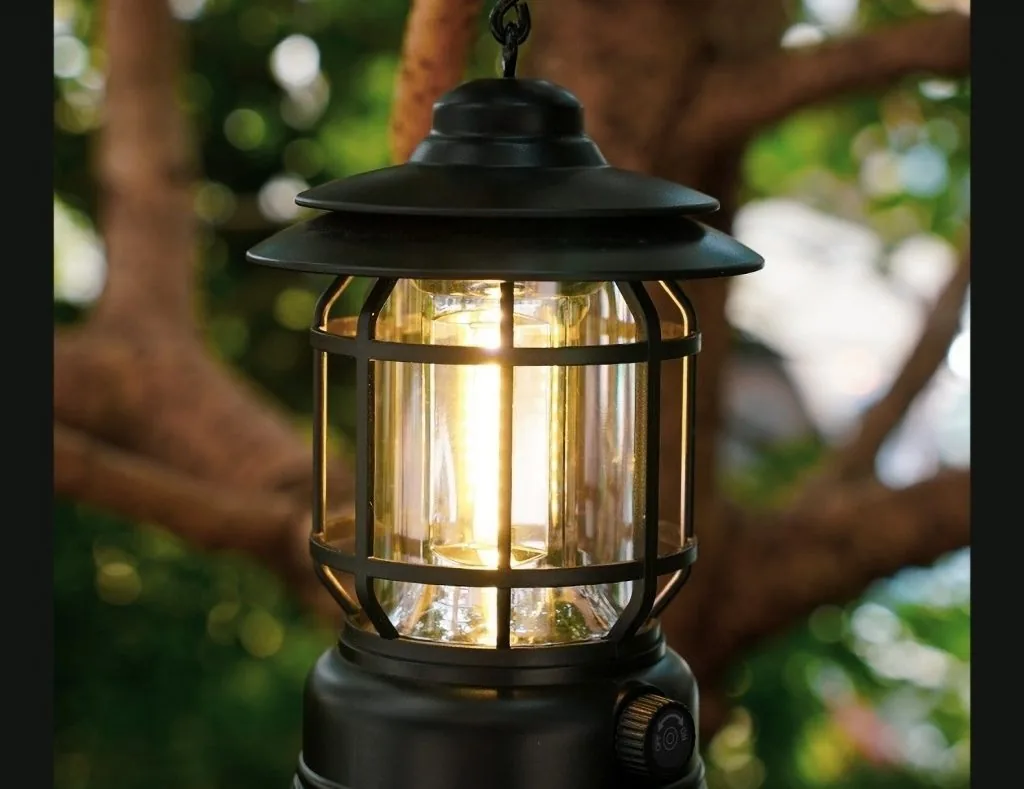
Rechargeable camping gear is popular and profitable, and it is the group where shipping rules matter most. Air transport of lithium batteries follows the IATA Dangerous Goods Regulations, and carriers can be stricter than the rules. Plan around three cases:
- Battery installed in the product (most lanterns, headlamps, fans). The easiest case. Many battery-capable lines accept it, and IATA recommends, but doesn't require, shipping these batteries at no more than 30% charge.
- Battery packed in the box but not installed. Since January 1, 2026, lithium-ion batteries packed with equipment must be shipped by air at no more than 30% charge (for batteries above 2.7 Wh in the simplified category). Ask the factory to install the battery if the design allows.
- Power banks and spare batteries. A power bank is a battery in its own right, so it ships under the strictest battery rules. Many parcel lines refuse them. Large portable power stations, which are usually well above 100 Wh, are fully regulated dangerous goods; they generally move as declared cargo by sea, then sell from an overseas warehouse.
In every case, the battery maker and every distributor after it must be able to provide a UN 38.3 test summary on request. Ask the supplier for it before you order, and check that the battery model and watt-hours match your product. Then check the product itself:
- Run time. Charge a sample fully and time it. "40 hours" claims often mean the lowest brightness setting; say so on your listing.
- Charging. Test the cable, port and charge indicator. USB-C beats proprietary connectors for reviews.
- Water resistance. If you claim a rating such as IPX4, ask for the test report and splash-test a sample.
- Switch protection. Products should be packed so they can't switch on in transit; use a lock mode, a pull tab or a protected switch.
Fuel and fire: sell stoves, not gas
Butane and propane canisters are flammable gas. USPS bans all gases from outbound international mail, and even within the US it accepts small canisters only by ground as Limited Quantity packages, never by air. From China, parcel shipping of fuel is not an option. Lighters, matches, fuel tablets and fire-starter gels are dangerous goods for the same reason.
That leaves a clean approach for stove sellers:
- Sell the stove, say "fuel sold separately", and tell customers which standard canister fits so they can buy it locally.
- Only ship new stoves that have never contained fuel. A factory test-fire can leave residue; ask for stoves that weren't test-fired with fuel, or that were fully purged.
- Don't let a supplier describe fuel as something else to get it on a parcel line. Undeclared dangerous goods get destroyed, and the account behind them gets closed.
Stove pots, kettles and mess kits are food-contact items; our kitchenware sourcing guide covers the FDA side.
Knives, axes and multi-tools
The federal Switchblade Knife Act bans bringing switchblades into the US. That includes knives that open automatically with a button, by gravity or by inertia, and US Customs also treats butterfly (balisong) knives as prohibited. Such knives are seized at the border. Two important details:
- Assisted-opening knives are exempt if the blade has a bias toward closing and you have to push the blade to start it opening. Out-the-front and button designs usually are not. If in doubt, request a binding ruling from US Customs or skip the design.
- Manual folders, fixed blades, axes and multi-tools are generally fine to import federally. State laws, and the rules of other countries you ship to, can be stricter, so check before you sell outside the US.
Packing matters too. Every blade needs a sheath, guard or locked-closed position so the edge can't cut through the packaging, and the outer box shouldn't advertise what's inside.
Insect repellents: pesticide rules apply
Repellents are a classic camping add-on and a compliance trap. Under US law, a product that claims to repel mosquitoes is a pesticide:
- Sprays, lotions, coils and treated wristbands must be registered with the EPA, unless they qualify as "minimum risk" products that use only approved ingredients and make no disease claims. Even those still need state registration in most states.
- Ultrasonic and electronic repellers are pesticide devices. They don't need product registration, but they must be made in an EPA-registered establishment with its number on the label, the importer must file an EPA notice of arrival, and the claims must be truthful. The FTC has warned sellers about unproven ultrasonic claims.
Most repellents on 1688 meet none of this. The simple answer is to leave them out of a China-sourced range, or buy stock that is already registered for the US.
Bundling small gear into kits
Small camping gear sells well in kits: a hammock with straps and a tarp, or a cook set with a lantern. Kits raise order value and keep each parcel small. Ship kits from one warehouse as one parcel: on a day with fewer than 20 orders, a three-SKU order is $2.00 + $1.00 + $1.00 = $4.00 to pick and pack, or we can pre-assemble kits at $7 per person per hour. Keep battery items and non-battery items in mind when you plan kits, since one battery product decides which shipping lines the whole parcel can use.
Bulky items such as chairs and tables follow different shipping math; see our guide to sourcing camping chairs and tables. For fees, see our pricing page, and remember that every parcel from China now pays US duties, so price on landed cost.
How PackQuay helps
We source camping gear from Chinese factories and ask suppliers for battery test summaries and other documents before you order. We check samples and batches at our Xinxiang warehouse, including run time and switch protection on battery products, and pack kits into one parcel under your brand. We'll also tell you early when something can't ship from China as a parcel. Send your product list on WhatsApp.
FAQ
Can I ship camping lanterns with lithium batteries from China?
Yes, on shipping lines that accept batteries. You need the battery's UN 38.3 test summary, and products with the battery installed are the easiest case. Batteries packed loose in the box must be shipped at no more than 30% charge by air since January 2026.
Can I dropship power banks or portable power stations?
Power banks are batteries in their own right and many parcel lines refuse them. Large power stations are fully regulated dangerous goods and usually move by sea to an overseas warehouse before being sold locally.
Can I ship camping gas canisters from China?
No. Butane and propane canisters are flammable gas, which is banned from international mail and air parcels. Sell stoves without fuel and tell customers which canister to buy locally.
Which knives can I import into the US?
Manual folding knives, fixed blades, axes and multi-tools are generally fine federally. Switchblades, gravity knives and butterfly knives are prohibited and seized by US Customs; true assisted-opening knives that need blade pressure to open are exempt.
Do mosquito repellent wristbands need EPA registration?
Usually yes, because a repellent claim makes the product a pesticide. Some "minimum risk" products using only approved ingredients are exempt federally but still need state registration in most states. Ultrasonic repellers are pesticide devices with their own labeling and import rules.