
Wholesaler vs Distributor vs Supplier: Who You Buy From in China
Quick answer: "Supplier" is the umbrella word for any business that sells you goods. A manufacturer makes them. A distributor has an agreement with specific manufacturers to stock and resell their products, often in a set region, and sells mainly to wholesalers and retailers. A wholesaler buys in bulk from manufacturers or distributors, usually across many brands, and resells in smaller bulk lots to retailers. When an online store buys from China, its supplier is usually one of three: a factory, a trading company or a wholesaler selling ready stock, and all three sit side by side on 1688 and Alibaba. Knowing which one you've found tells you how low the price can go and how much you can change.
The roles in one table
| Role | What it does | Buys from | Sells to | Can it change the product? |
|---|---|---|---|---|
| Manufacturer | Makes the goods | Material and component makers | Distributors, wholesalers, brands, sometimes you | Yes, within its process and minimums |
| Distributor | Stocks and resells specific manufacturers' products, often under contract | Manufacturers | Wholesalers and retailers | No |
| Wholesaler | Buys and resells in bulk, many brands, no formal tie to them | Manufacturers or distributors | Retailers and online sellers | No |
| Trading company | Sells products from several factories and handles export | Factories | Overseas buyers | Only by asking its factory |
| Retailer | Sells single units to the public | Any of the above | End customers | No |
| Supplier | Any of the above, when it is selling to you | Varies | You | Depends which one it is |
One role is missing on purpose. A sourcing agent isn't a supplier: it works for you, not for a seller. It finds and buys from the suppliers above, checks the goods and ships them to you or your customers, and it is paid by you.
Distributor vs wholesaler: the pair everyone confuses
The clearest way to separate them is to ask what each one's relationship is with.
- A distributor's relationship is with the manufacturer. There is an agreement, sometimes with an exclusive territory. The distributor carries that brand's stock and may handle its marketing, warranty claims and returns in the region.
- A wholesaler's relationship is with the goods. It buys whatever sells, from whoever offers the best price, across many brands, and makes no promises to any of them.
In real life the labels overlap, and plenty of companies call themselves both. So ask what they actually do: do you have an agreement with the manufacturer, who handles warranty claims, and can you show an authorization letter? For branded goods that letter matters. Buying a well-known brand's products from someone who calls themselves a distributor but can't prove it is a common way to end up with counterfeits.
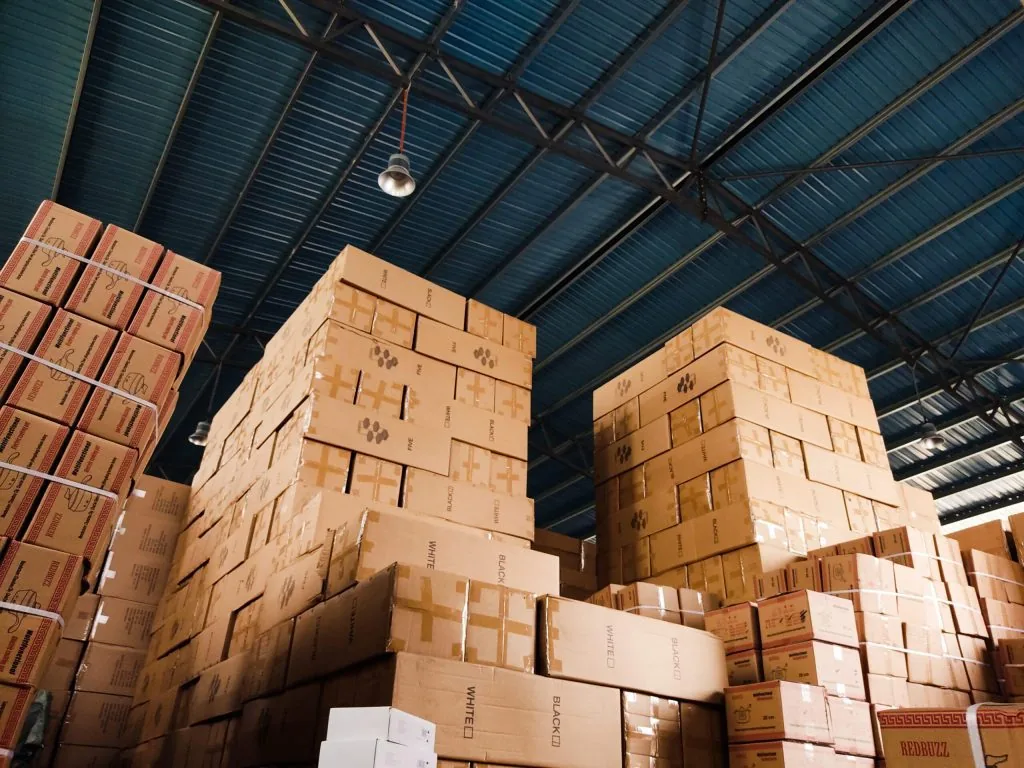
Who you actually meet when you buy from China
Factories
The lowest prices, and the only place you can get your logo or your own specification. Factories usually focus on one product family, set minimum order quantities per production run and can be slow to answer small buyers. Many sit in industrial clusters where dozens of plants make similar goods.
Trading companies
They sell across many categories, speak English, accept smaller orders and handle export paperwork. Their price includes their margin, and quality depends on which factory they buy from that month. A good trading company is useful when you need many different products in small quantities.
Wholesalers selling ready stock
They sell from inventory in small lots, including the 1688 sellers who will ship a single piece. Ideal for testing a product, but there is no customization, and stock and quality can change from batch to batch.
All three list on 1688 and Alibaba.com, and the platforms' badges help you filter but don't prove anything. Our guides to the 1688 website and to B2B marketplaces explain what each badge does and doesn't tell you.
Seven checks to find out who you're dealing with
- Look up the business license. Ask for the company's registered Chinese name and its 18-character unified social credit code, then search it on China's official National Enterprise Credit Information Publicity System (gsxt.gov.cn). The name must match, the status should be active, and the business scope tells a story: production or manufacturing in the scope points to a factory, while a scope limited to wholesale and retail points to a trader.
- Match the bank account to the license. A request to pay a different company, or a personal account, is a reason to stop.
- Ask for a live video walk-through of the production line making your type of product, not a showroom or a sample shelf.
- Ask a production question: what is the lead time for 1,000 units, and what limits it? A factory answers with its own capacity. A reseller has to go and ask someone.
- Ask for a change: a different color or your logo, at a stated quantity. A factory gives a direct answer with a minimum. A wholesaler with ready stock usually can't.
- Look at the product range. A "factory" that makes kitchen knives, phone cases and pet beds is a trading company.
- Check the address on a map. A factory sits in an industrial area with buildings to match. An office tower suggests a trader.
These checks tell you who you're dealing with, not whether they're any good. Quality still needs approved samples and an inspection of every batch.
Which supplier fits which stage
| Your situation | Best fit | Why |
|---|---|---|
| Testing a product | Wholesaler with ready stock | No minimum, ships quickly |
| A steady seller | Factory, directly or through an agent | Lower unit price, consistent batches |
| Your logo or your own spec | Factory | Only the maker can change the product |
| Many products in small quantities | Trading company or sourcing agent | One counterpart instead of ten |
| Reselling a known brand | Authorized distributor | Proof the goods are genuine |
Most stores move down this table as they grow: ready stock to test, then the factory once a product sells. Each step changes your unit price, so re-run your numbers with our worked example of wholesale vs retail pricing. The step from finding a factory to negotiating samples and minimums is covered in our guide to sourcing agents for dropshipping.
How PackQuay helps
We're a sourcing agent and fulfillment warehouse, not a wholesaler, so we have no catalog to push. Send a product link or photo and we find the factory behind it, check the license and samples, buy, inspect 20% of each batch free and ship from our own warehouse in Xinxiang. The sourcing fee runs from 10% of product cost down to 4% on large batches. Start with a link on WhatsApp.
FAQ
What is the difference between a supplier and a distributor?
Supplier is the general term for any business that sells you goods. A distributor is one kind of supplier: it has an agreement with specific manufacturers to stock and resell their products, usually to wholesalers and retailers.
What is the difference between a wholesaler and a distributor?
A distributor works closely with particular manufacturers, often under contract and sometimes with an exclusive territory. A wholesaler buys from many sources and brands without a formal relationship and resells in bulk to retailers.
Is a manufacturer a supplier?
Yes, when it sells to you. Manufacturers, distributors, wholesalers and trading companies are all suppliers from the buyer's point of view.
How can I tell if a Chinese supplier is a factory or a trading company?
Check the business license on China's official enterprise credit system to see whether manufacturing is in its business scope, ask for a live video of the production line, and ask questions only a maker can answer, such as lead time and capacity for your quantity.
Should I buy from a factory or a trading company?
Buy from a factory once a product sells steadily or you need your own branding, because it is cheaper and can change the product. A trading company can make sense for many different items in small quantities.