
3PL in Supply Chain Management: What It Runs, What You Keep
Quick answer: In supply chain management, a 3PL (third-party logistics provider) takes over the execution steps between your supplier and your customer: receiving stock, storing and counting it, fulfilling orders, shipping and handling returns. China-based 3PLs often add purchasing and quality inspection. What a 3PL does not take over is the decisions: what to sell, how much to buy, when to reorder, which markets to serve and whether your products comply with the rules there. A supply chain that works with a 3PL splits those jobs cleanly, shares data in both directions and plans around the full lead time from placing a factory order to having stock ready to ship.
Your supply chain in seven processes
The SCOR Digital Standard, the supply chain reference model maintained by the professional body ASCM, splits supply chain work into seven processes: Orchestrate, Plan, Order, Source, Transform, Fulfill and Return. It's a useful checklist for deciding who does what. Here is how each one looks for an online store working with a 3PL:
| Process | In an online store | Can a 3PL run it? | Who decides |
|---|---|---|---|
| Orchestrate | Markets, channels, product compliance, where stock should sit | No; it can advise | You |
| Plan | Forecasts, reorder points, safety stock, promotion calendar | It supplies the stock data and low-stock alerts | You |
| Order | Taking orders and promising delivery dates | It receives orders automatically and ships within the agreed time | You set the promise |
| Source | Finding factories, samples, buying | A China-based 3PL or agent can run purchasing | You approve suppliers and samples |
| Transform | For resellers: labeling, kitting, bundles, inserts | Yes | You set the rules per SKU |
| Fulfill | Pick, pack, ship, sync tracking | Yes: this is its core | You choose shipping options |
| Return | Receive, inspect, restock or write off | Yes | You set the returns policy |
The pattern: a 3PL can run most of the "doing" processes, while Orchestrate and Plan stay with you. Providers that call themselves 4PLs offer to take over more of the planning; our 3PL, 4PL and 5PL guide explains when that's worth paying for.
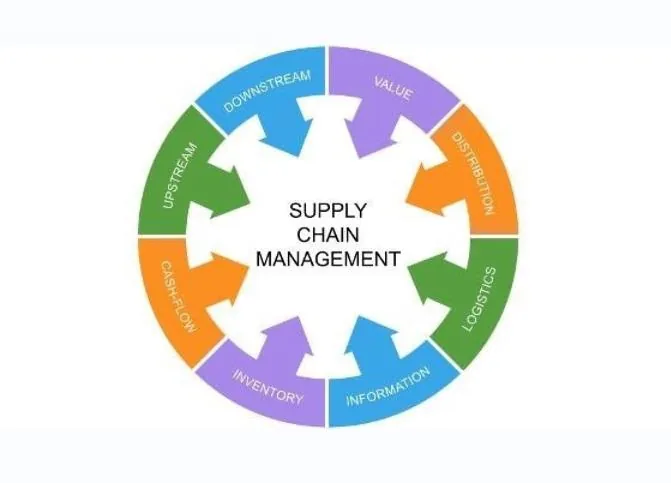
What stays with you, whatever the contract says
- Demand. Your ads, launches and discounts drive sales. The warehouse can't forecast a campaign it hasn't heard about.
- Buying decisions. How much stock to commit cash to, and when.
- Compliance. As the seller, you answer for product safety rules, labeling and the claims on your listings.
- Imports into your market. When stock enters the US in bulk, the importer of record, usually you, is responsible for the declaration and the duty.
- Your customers. The 3PL gives you tracking and stock data; you decide what to tell buyers when something is late.
The lead-time stack from China
Lead time is the gap between deciding to reorder and having stock ready to ship. Sellers usually count only the supplier's production time and then run out. Add every step:
- Supplier time: making the goods or pulling them from stock. Ask each supplier and record it per SKU.
- Delivery to the 3PL: the factory's truck or courier to the warehouse in China.
- Receiving and inspection: counting cartons, checking a share of units and shelving them.
- Dispatch: once stock is shelved, orders go out. At PackQuay, stocked orders leave within 24 hours (48 at peak).
- If the stock is going overseas: add the full door-to-door time your forwarder quotes for the freight leg, including import clearance and receiving at the overseas warehouse.
Without stock, the stack is different: a China 3PL buys each item after your customer pays. At PackQuay that takes 4–5 days on average after payment, before the parcel ships.
Worked example: when to reorder
These figures are illustrative; swap in your own. A product sells 30 units a day and is stocked at a 3PL in China. The supplier needs 7 days and receiving plus inspection takes 2 more, so lead time is 9 days.
- Sales during the lead time: 30 × 9 = 270 units.
- Safety stock of 5 days' sales, to cover a slow supplier or a sales spike: 30 × 5 = 150 units.
- Reorder point: 270 + 150 = 420 units. When stock on hand falls to 420, place the next order.
Set that number as the product's low-stock alert in your 3PL's system, and review it whenever sales or the supplier's lead time change. For stock in an overseas warehouse, the freight leg makes the lead time much longer, so the reorder point rises with it; see how a global 3PL warehouse network works.
Supply chain data worth asking your 3PL for
Order sync and tracking are the basics. To manage the chain, not just the orders, ask for:
- Defects by supplier. Inspection results per batch show which factory is slipping before your reviews do.
- Actual lead times. When each purchase order was placed, delivered and shelved.
- Stock age. Which SKUs haven't moved in weeks, so you stop reordering them.
- Landed cost per unit. Product, sourcing fee, packing, shipping and duty, so margin decisions use real numbers.
In return, send your 3PL your promotion calendar and any new product launches a couple of weeks ahead.
Four ways the split goes wrong
- Nobody owns reordering. The 3PL assumes you're watching stock; you assume they'll warn you.
- Lead time leaves out receiving and inspection. Stock "arrives" but isn't sellable for days.
- The 3PL is judged on its pick and pack fee alone. Defect rates and dispatch times affect your margin far more.
- Stock is spread over too many warehouses too early. Each location needs its own safety stock, which ties up cash.
For the full list of services and when each stage of a store needs them, see what a third-party logistics provider offers.
How PackQuay fits your supply chain
We run Source, Transform, Fulfill and Return from our own warehouse in Xinxiang, Henan, and give you the data for Plan. That means sourcing from factories, 20% of each batch inspected free, labeling and kitting at $7 per person per hour, dispatch within 24 hours for stocked orders, stock updates by SKU from your account manager, and returns to our warehouse or a partner warehouse overseas. You keep the decisions. Ask an account manager on WhatsApp to map your lead times per product.
FAQ
What does a 3PL do in supply chain management?
It runs the execution steps between supplier and customer: receiving, storage, inventory counts, order fulfillment, shipping and returns. Some China-based 3PLs also handle purchasing and quality inspection.
What parts of the supply chain should I keep in-house?
Demand planning, buying decisions, market and channel choices, product compliance and customer communication. A 3PL supports these with data but shouldn't make the calls.
How do I calculate a reorder point with a 3PL?
Multiply daily sales by the full lead time, from placing the order to stock being shelved and sellable, then add safety stock. Set the result as the low-stock alert for that SKU.
Is a 3PL the same as supply chain management?
No. Supply chain management covers planning, sourcing, making, delivering and returning goods. A 3PL is one partner that runs part of it, mainly warehousing, fulfillment and transport.
What is the SCOR model?
A supply chain reference model maintained by ASCM. Its current version, the SCOR Digital Standard, groups supply chain work into Orchestrate, Plan, Order, Source, Transform, Fulfill and Return.