What Is 3PL and How Does It Work? One Order, Start to Finish
Quick answer: 3PL stands for third-party logistics. You hand the physical side of your store (storing stock, packing orders, shipping them, handling returns) to a company that does this work for many sellers. It runs on a connection between your store and the 3PL's warehouse: your stock is received and shelved by SKU, every paid order passes to the warehouse automatically, gets picked, packed and shipped, and the tracking number comes back to your store. You keep the parts your customers see: products, brand, marketing and customer service.
What "third party" means
Logistics people number the players in a supply chain:
- First party: the seller or manufacturer doing its own logistics.
- Second party: a carrier that moves goods from one point to another.
- Third party: a company that runs several steps for you, such as storage, packing, shipping and returns, with its own warehouse, staff and software.
So a 3PL is neither a courier nor a supplier. It sits between your supplier and your customer and handles the physical work in between. Some 3PLs, particularly in China, also buy the goods for you, which removes one more handoff.
One order, from factory to doorstep
Follow a single order through a China-based 3PL. Say you sell a kitchen gadget on Shopify and a batch is already on its way to the warehouse.
Before the order: stock arrives
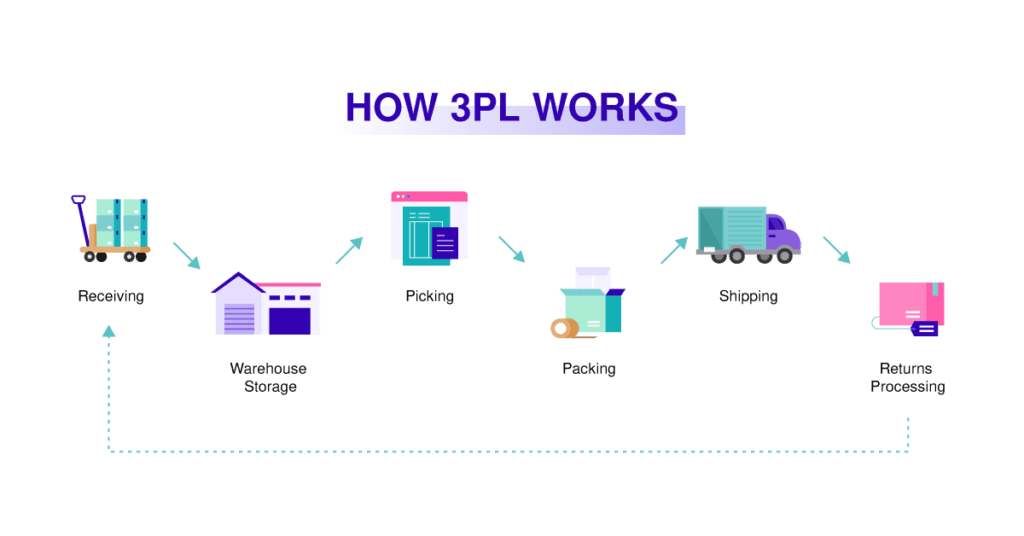
- Inbound. The factory delivers cartons to the 3PL's warehouse, or the 3PL buys from the factory on your behalf.
- Receiving. Staff count the cartons against what you said was coming and note any difference.
- Inspection. A share of the units is checked. Defective ones go back to the supplier for replacement.
- Put-away. The SKU gets its own shelf location, and the stock level you see updates.
The order: from click to parcel
- Order sync. A customer pays in your store late at night their time. The order passes to the warehouse automatically; nobody has to be awake to forward it.
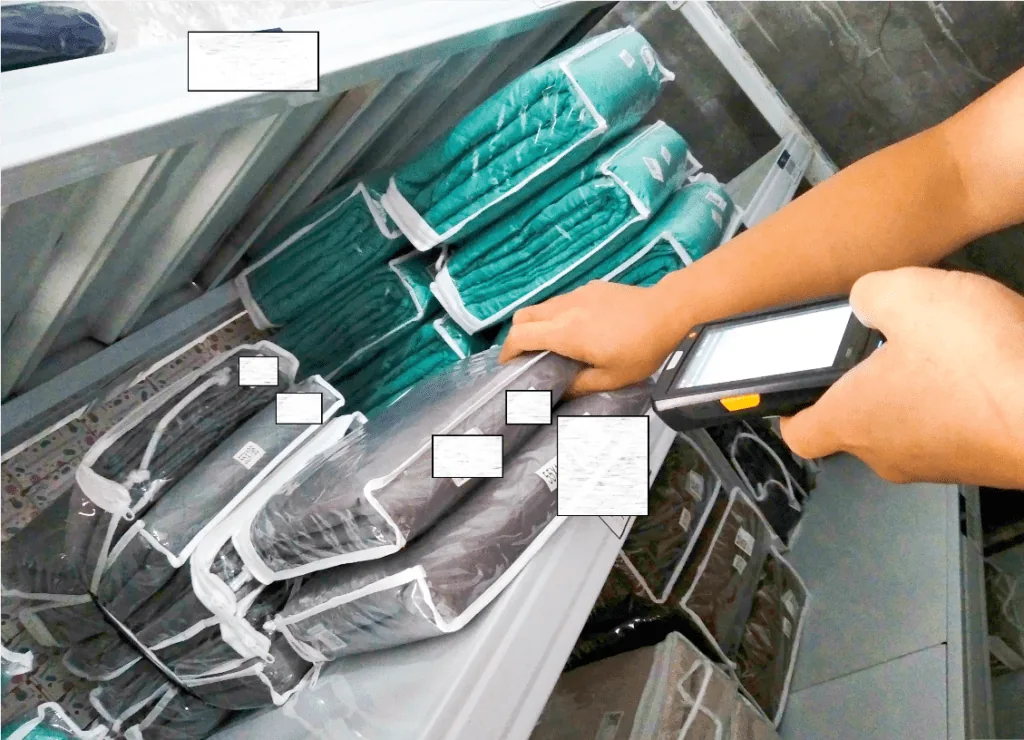
- Picking. A picker goes to the SKU's shelf and scans the item, so the system confirms the right product and variant.
- Packing. Everything in the order goes into one parcel, in your mailer or box, with your insert card if you use one.
- Labeling. The shipping line that matches the method your customer chose is selected and the label printed.
- Dispatch. The parcel is handed to the carrier. Only now does tracking go back to your store, and the order shows as fulfilled.
After dispatch: the journey
- Export and line haul. The parcel leaves China on the line chosen for its destination.
- Import. Customs clears it in the destination country. For the US, every parcel from China has owed duty since the $800 de minimis exemption ended for China in May 2025, so duty should be prepaid rather than billed to your customer.
- Last mile. A local carrier delivers, and your customer follows it with the same tracking number.
- Returns, if any. The item goes to a warehouse to be checked and restocked or written off. Returns to China are slow and can attract duty, so many sellers route them to a warehouse in the customer's country.
What flows between your store and the 3PL
| Direction | What moves | Why it matters |
|---|---|---|
| Store to 3PL | Paid orders: items, quantities, address, shipping method | No copy-pasting and no missed orders |
| 3PL to store | Carrier and tracking number, sent at dispatch | Customers can follow their parcel; your delivery data stays honest |
| 3PL to you | Stock by SKU, low-stock alerts, inspection results | You reorder before you sell out |
| You to 3PL | Inbound notices, packaging rules, product changes | The warehouse is ready when goods arrive |
Shopify and WooCommerce stores usually connect directly. Sellers on other platforms can upload orders as a CSV or Excel file and get tracking back the same way.
Who does what
| You | The 3PL |
|---|---|
| Choose products and set prices | Receive, count and inspect stock |
| Run the store and the ads | Store stock by SKU |
| Answer your customers | Pick, pack and label every order |
| Decide when and how much to reorder | Ship on the right line and sync tracking |
| Approve samples and packaging | Process returns and report stock levels |
Six 3PL terms you'll hear in the first week
- SKU: stock keeping unit, the code for one exact product variant. A red mug and a blue mug are two SKUs.
- Inbound notice: your message telling the warehouse what is arriving, when, and how many of each SKU are in each carton. Some 3PLs call it an ASN (advance shipping notice).
- Dock to stock: the time between goods arriving and being available to sell.
- Consolidation: packing all the items in one order into a single parcel, even when they came from different factories.
- Landed cost: what one order really costs you once product, fees, shipping and duty are added together.
- DDP (delivered duty paid): the duty is paid before the parcel reaches the customer, so nobody gets a bill at the door.
3PL vs. dropshipping vs. doing it yourself
Doing it yourself means stock in your garage and evenings spent packing: full control, paid for with your time. Dropshipping means a supplier ships each order and you hold no stock, often with the supplier's packaging and little say over quality. With a 3PL you own the stock and the 3PL does the work under your brand. Many China-based providers combine the last two: they source order by order while you test a product, then hold stock once it sells. Our guide to China dropshipping agents covers the first half; for the full list of services by stage, see what a third-party logistics provider offers. Running a Shopify store and wondering whether the switch is worth it? Read the advantages and trade-offs of Shopify 3PL fulfillment.
How it works at PackQuay
Every step above happens in-house at our own warehouse in Xinxiang, Henan. Connect Shopify or WooCommerce (or upload a CSV), send stock or let us source it, and orders flow in automatically. Goods are counted on arrival and 20% of each batch is inspected free; stocked orders leave within 24 hours (48 at peak), and tracking syncs to your store only once the parcel has left. Storage is free for your first 2 months. More on our 3PL fulfillment service, or ask an account manager on WhatsApp to walk you through a test order.
FAQ
What does 3PL stand for?
Third-party logistics. It means paying an outside company to store, pack and ship your goods, and often to process returns, using a warehouse and team it shares with many other sellers.
How does a 3PL receive my orders?
Through a connection to your store. Paid Shopify and WooCommerce orders pass to the warehouse automatically, and sellers on other platforms can upload orders as a CSV or Excel file.
Do I still own my inventory at a 3PL?
Yes. The 3PL stores and ships it for you, but the stock belongs to you, and you should be able to see levels by SKU at any time.
Is a 3PL the same as dropshipping?
No. In dropshipping a supplier ships each order and you hold no stock. With a 3PL you own stock that the 3PL stores and ships under your brand. Some China-based providers offer both.
How fast does a 3PL ship an order?
It depends on the provider and on whether the item is in stock. At PackQuay, stocked orders leave within 24 hours (48 at peak), and items without stock are sourced in 4–5 days on average after payment.