
Sourcing Space-Saving Storage Products From China: QC and Shipping
Quick answer: Space-saving products (drawer organizers, stackable bins, over-door racks, vacuum storage bags, under-bed boxes, wall hooks, slim rolling carts) are a good fit for sourcing from China: cheap to make, easy to bundle and bought by every renter and small-home owner. They succeed or fail on two numbers, though. The first is size: if the organizer doesn't fit the drawer, it comes back. The second is load: if the hook or shelf drops its load, you get a one-star review. Verify both on samples and on every batch, choose designs that nest or fold flat so you don't pay to ship air, and check two US rules before you add any furniture-sized storage: the tip-over standard for dressers and the formaldehyde rule for MDF and particleboard.
Why storage products need their own approach
Most home products are bought for how they look. Storage is bought for how it fits. Your customer measures a cabinet, a closet or the gap beside the fridge, then reads your listing. That changes what matters when you source:
- Exact dimensions are the product. Inner and outer measurements, in inches, have to be right on the listing and on the unit that ships.
- Load claims are promises. "Holds 22 lb" on a no-drill hook is a claim you can be held to.
- Shipping cost is driven by volume, not weight. A plastic bin weighs almost nothing but fills a large box.
- Multi-packs sell better than singles. Sets of bins, hangers or bags raise order value, but every set has to arrive complete.
Pick designs that ship small
Carriers charge by whichever is larger: the parcel's actual weight or its dimensional weight, which is based on box size. For storage products, design is the biggest lever on shipping cost.
| Design | Examples | Shipping profile | What to watch |
|---|---|---|---|
| Nests inside itself | Tapered bins, food containers, plant pots | Good: a set of five takes the space of one | Lids that don't nest; scuffing between units |
| Folds or collapses | Fabric cubes, collapsible silicone containers, folding crates | Very good: ships nearly flat | Hinges and folds that crack after repeated use |
| Flat-pack, customer assembles | Rolling carts, shoe racks, shelving units | Good, but heavier | Missing screws, unclear instructions, holes that don't line up |
| Vacuum or compression | Vacuum bags, compression packing cubes | Excellent: very light and flat | Valves and zippers that leak air overnight |
| Rigid, fixed shape | Acrylic organizers, wooden boxes, fixed baskets | Poor: you pay to ship the space inside | Breakage and high dimensional weight |
If a product only comes in a rigid version, compare its landed cost with a nesting or folding alternative before you commit. The difference often decides whether a $19.99 price works.
What to check on samples and every batch
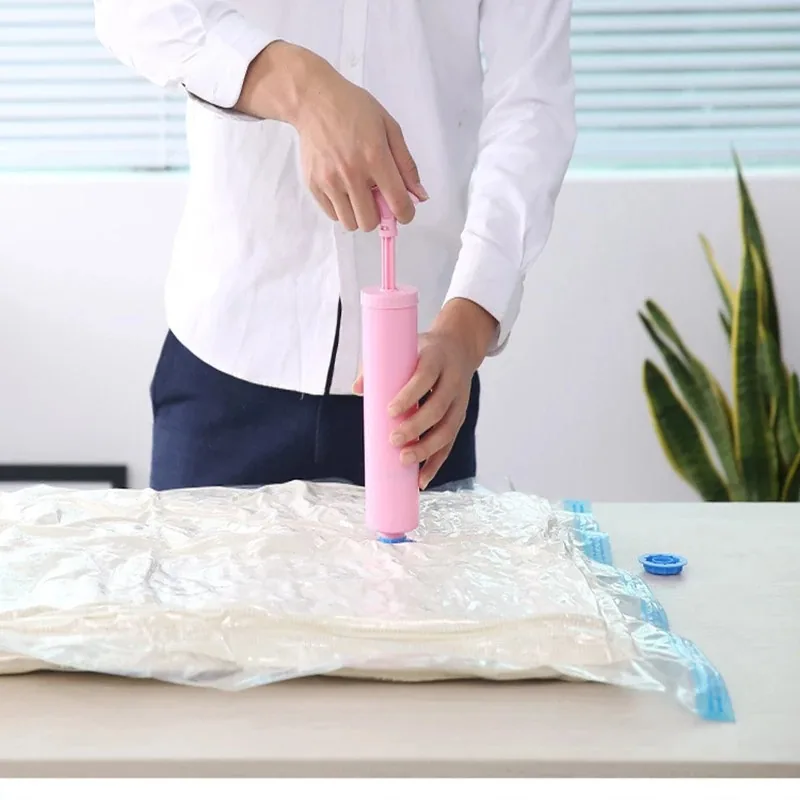
- Measure, don't trust the spec sheet. Measure inner and outer dimensions on several units with a tape and calipers. Agree a tolerance with the supplier in writing, for example ±0.2 inches, and reject batches outside it.
- Load-test hooks, rods and shelves. Hang the claimed weight on adhesive hooks and tension rods for 24 hours on smooth tile or painted wall. If the product fails below the claim, lower the claim or change the supplier.
- Leak-test vacuum bags. Fill, seal and pump a few bags, then leave them overnight. A bag that has filled with air by morning will generate complaints, however good it looks.
- Stack and roll. Stack bins to the height shown in your photos and push on the top. Roll carts across a floor with a full load; wheels and axles are the usual weak point.
- Check fit with common doors and drawers. Over-door racks need to clear the door's thickness and the gap above it. Note the supported door thickness on your listing.
- Count every part. For flat-pack items, check the screw bag against the instructions. For multi-packs, count units in a sample of sets.
- Smell and finish. Fabric bins and plastic boxes with a strong chemical smell get returned. So do sharp edges on metal racks.
Every batch that reaches our warehouse has 20% of its units inspected free. If you want every unit measured or load-tested, extra inspection is $7 per person per hour. See our product inspection page for what a report covers.
Two US rules for furniture-sized storage
Small organizers have few product-specific rules. Once you move into dressers, cabinets and shelving, two are worth knowing before you place an order:
Tip-over standard for clothing storage units
Under the STURDY Act, the CPSC adopted a mandatory tip-over standard (16 CFR part 1261, based on ASTM F2057-23) for clothing storage units made after September 1, 2023. It covers freestanding units such as dressers, chests of drawers and armoires that are at least 27 inches tall, weigh at least 30 pounds and have at least 3.2 cubic feet of storage. Covered units must pass stability tests that simulate a child climbing on open drawers, carry a permanent warning label and come with an anti-tip device. Importers also need a certificate of compliance backed by testing. A slim drawer unit sold as "space-saving" can easily fall inside this scope, so check the size before you list one.
Formaldehyde rule for MDF and particleboard
Finished goods that contain hardwood plywood, MDF or particleboard, such as many cabinets, shelves and storage boxes, fall under the EPA's TSCA Title VI formaldehyde standards. The panels must come from a certified producer. Finished goods need a label showing the fabricator, the production month and year and a TSCA Title VI compliance statement, unless they contain 144 square inches of composite wood or less. The importer files a TSCA import certification and keeps supplier records. Ask the factory for its panel certification before you order, not after the goods are packed.
These rules apply to the importer and seller, not just the factory. If a product sits near either threshold, get the test report or panel certificate first, or choose a smaller design.
Multi-packs and kits
Storage sells well in sets: a closet kit of bins, hangers and hooks, or a moving kit of vacuum bags and a pump. Two ways to build them:
- Factory sets. The supplier packs the set. Cheapest, but you're limited to what they offer.
- Kits assembled at the warehouse. We combine items from different suppliers into your own set and packaging. Kitting is $7 per person per hour.
Pick and pack is charged per order. On a day with fewer than 20 orders, a single-SKU order is $2.00, and a 2-pack of the same organizer is $2.00 + $0.50 for the extra unit = $2.50. The full fee table is on our pricing page. For a bundle under your own name, see our guide to private label dropshipping.
Landed cost and delivery
Bulky storage products are where shipping eats margin. Before you set a price, get a landed-cost quote that covers product, packaging, shipping and US duties. Duties now apply to every parcel from China, because the $800 duty-free exemption no longer covers them. Once a bin set or cart sells every day, shipping a carton load to an overseas warehouse is usually cheaper per unit than single parcels from China, and delivery drops to 1–5 days. Our international shipping guide compares the options.
How PackQuay helps
We source storage and space-saving products from Chinese factories, measure and load-check them at our warehouse in Xinxiang, and pack them in the smallest box that protects them. We can assemble multi-supplier kits, add your branded packaging and quote landed cost for your market. Send your product links on WhatsApp.
FAQ
Which space-saving products are easiest to source from China?
Light products that nest or fold flat: fabric storage cubes, collapsible silicone containers, vacuum storage bags, drawer dividers and stackable bins. They are cheap to ship and simple to inspect.
How do I avoid returns on storage products?
Make the dimensions on your listing exact, measure units from every batch against an agreed tolerance and load-test hooks, rods and shelves against the weight you advertise.
Do dressers and drawer units from China need testing?
Freestanding clothing storage units at least 27 inches tall, at least 30 pounds and at least 3.2 cubic feet must meet the CPSC's mandatory tip-over standard, with a warning label and anti-tip device. Ask for the test report before you order.
What is a TSCA Title VI label?
A label required on many finished goods that contain MDF, particleboard or hardwood plywood. It shows the fabricator, the production date and a statement that the product complies with the EPA's formaldehyde standards.
Why is shipping so expensive for plastic storage bins?
Carriers charge by box size as well as weight, so a light but bulky bin can cost more to ship than a heavy small item. Nesting or collapsible designs and bulk shipments to an overseas warehouse bring the cost down.